.png?w=1280&h=354)

6. Early to Mid-Qing Dynasty(1644~1735): The Royal Favor
Unlike the Ming Dynasty, a vast number of gaiwans from this period have survived to this day, offering a dazzling array of artifacts that provide ample material for later research. Modern museums and archives categorize them as "gaiwan", though no official historical records explicitly document this term.
The most striking among them are undoubtedly the royal-commissioned imperial kiln. These were made not only from porcelain but also from materials such as purple clay (zisha), jade, ivory, and even gold. Their decorative techniques and styles were innovative, showcasing extreme luxury and refinement. This reflects breakthroughs in ceramic technology at the time (such as enamel and famille rose) and confirms that gaiwans had become an essential tea ware in the imperial court.
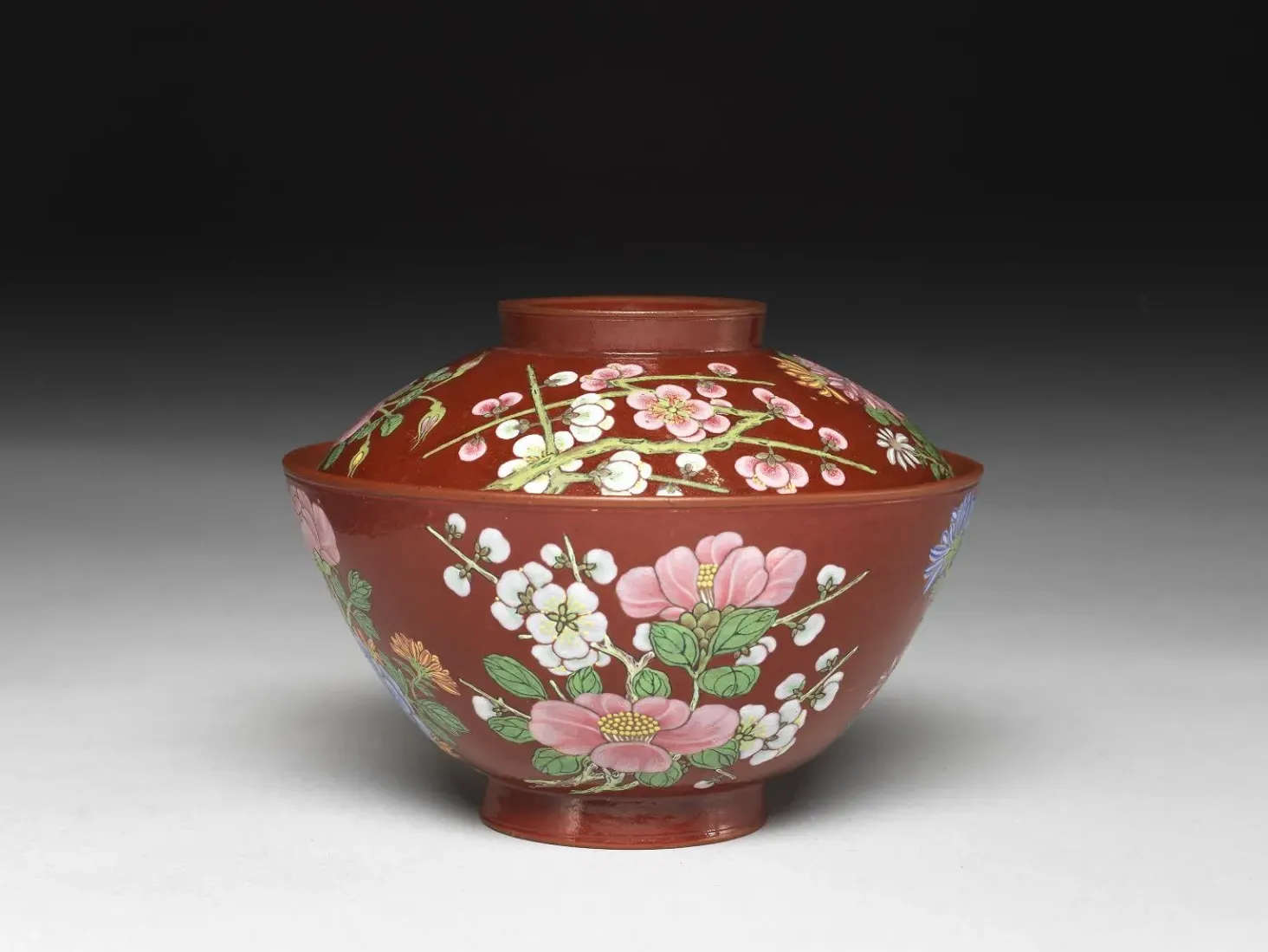 Purple Clay Gaiwan From Kangxi Period(1662~1722), Diameter 11.1cm
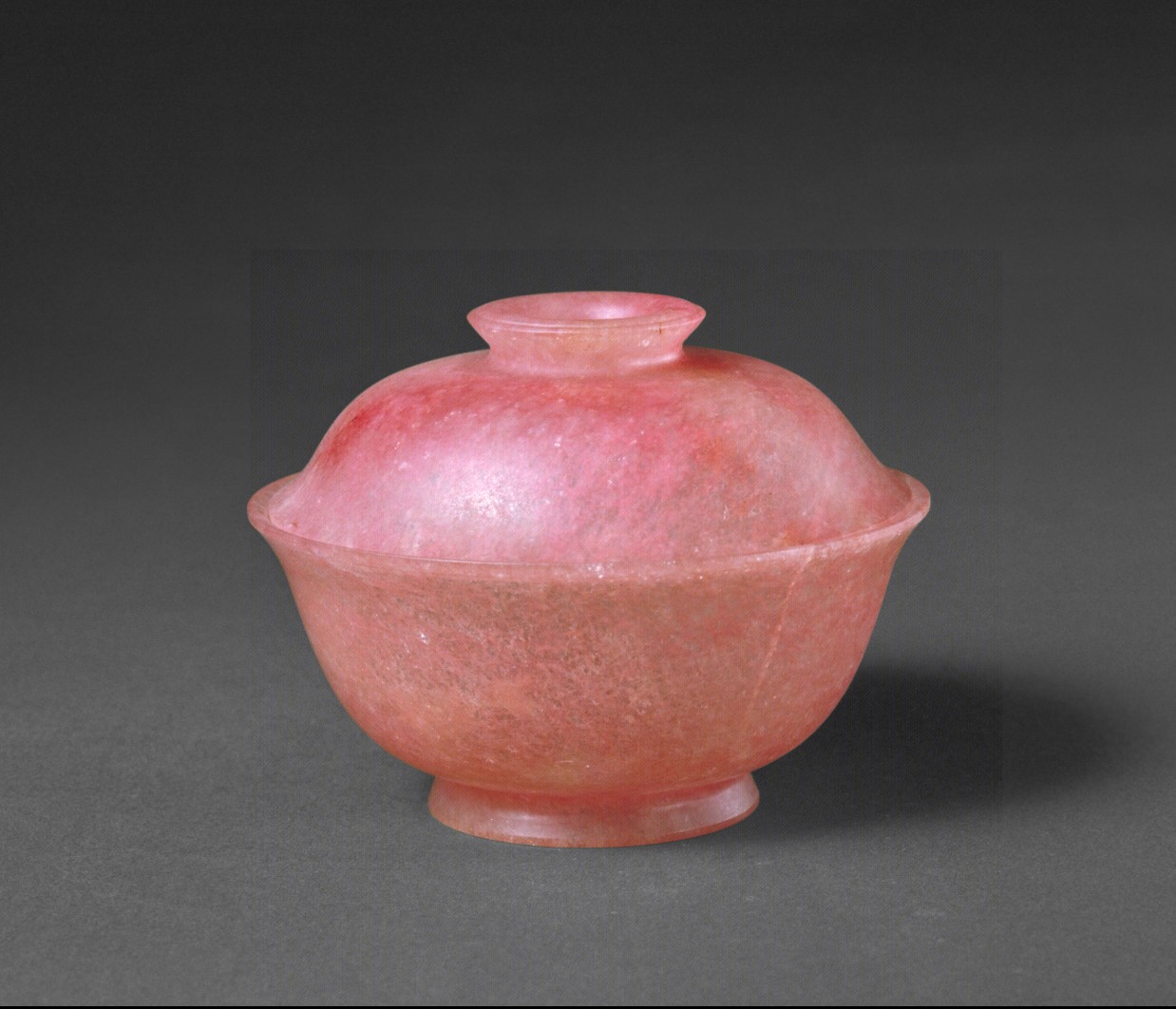 Rose quartz Gaiwan From Qing Dynasty, diameter 12.3 cm
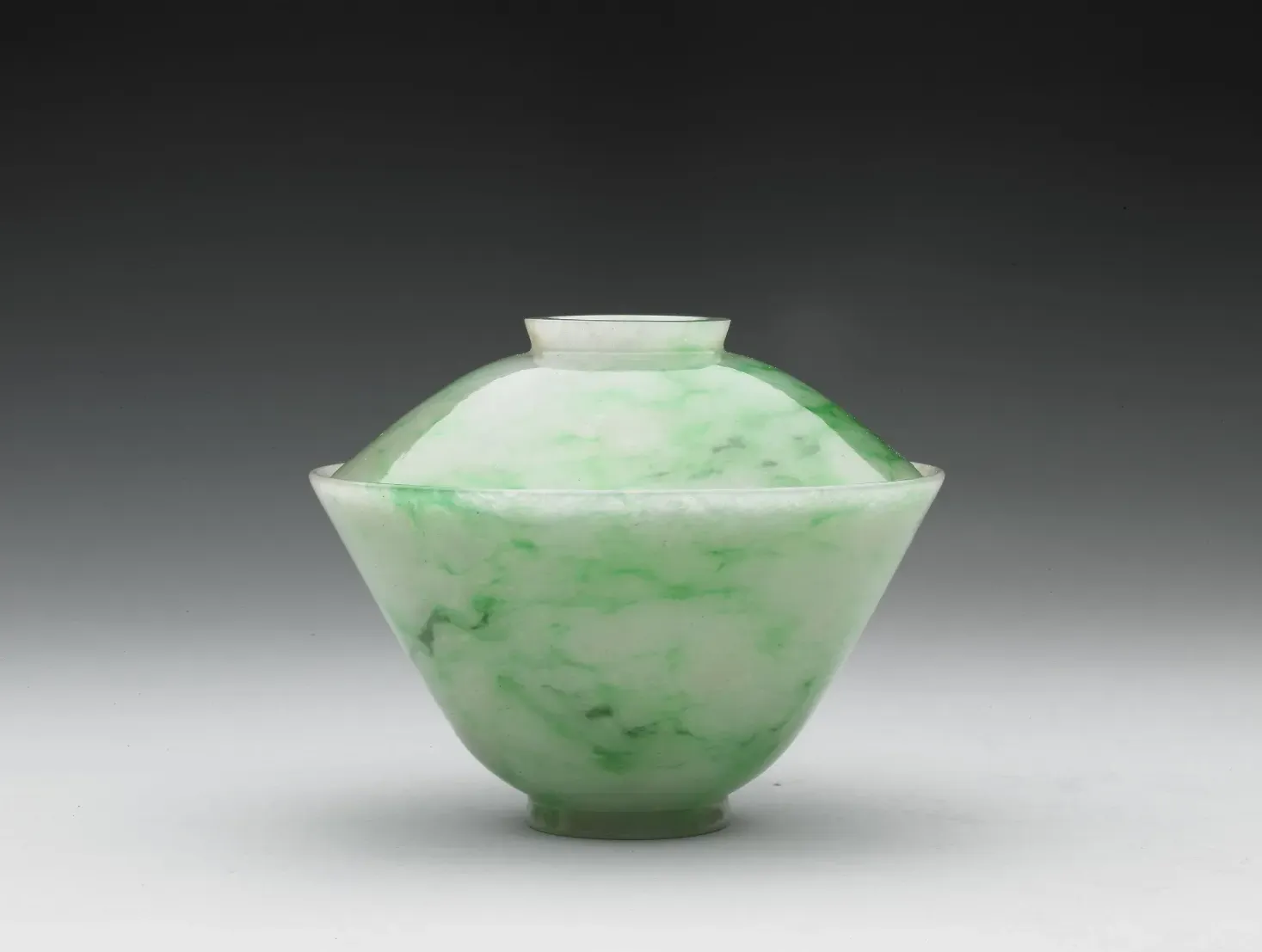 Jade Gaiwan From Qing Dynasty, Diameter 10.5cm
The earliest written records of Gongfu tea also appeared during this period. However, they praised purple clay teapots and small tea cups, with no mention of gaiwans.
A distinctive feature of gaiwans from this era was that the lid's diameter was always oversized, some lids even reaching the same height as the bowl itself, I guess that these lids might have also been used as tea cups, much like modern travel tea sets.
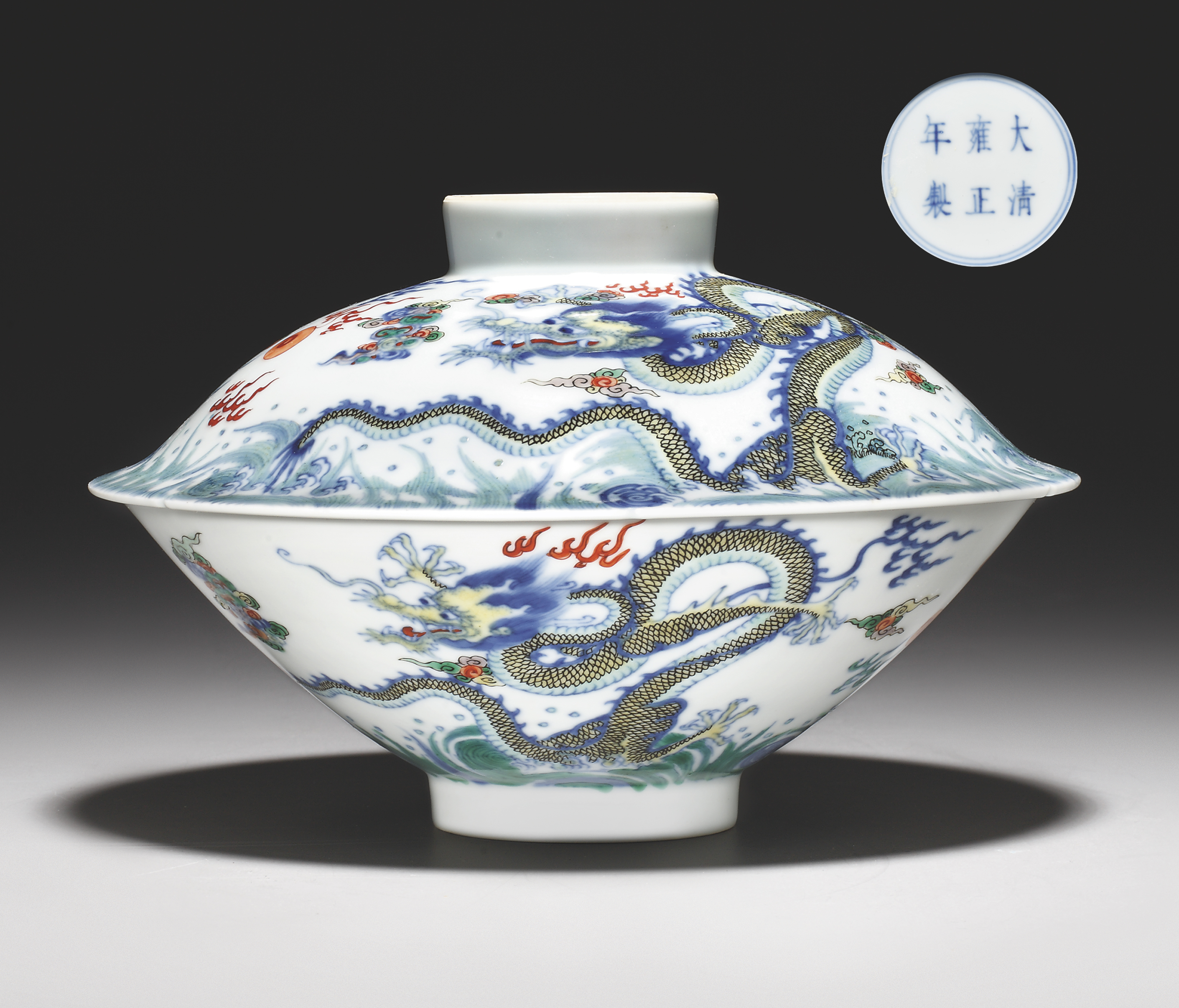 Porcelain gaiwan from Yongzhen Period(1723-1735), Diameter 19.2cm
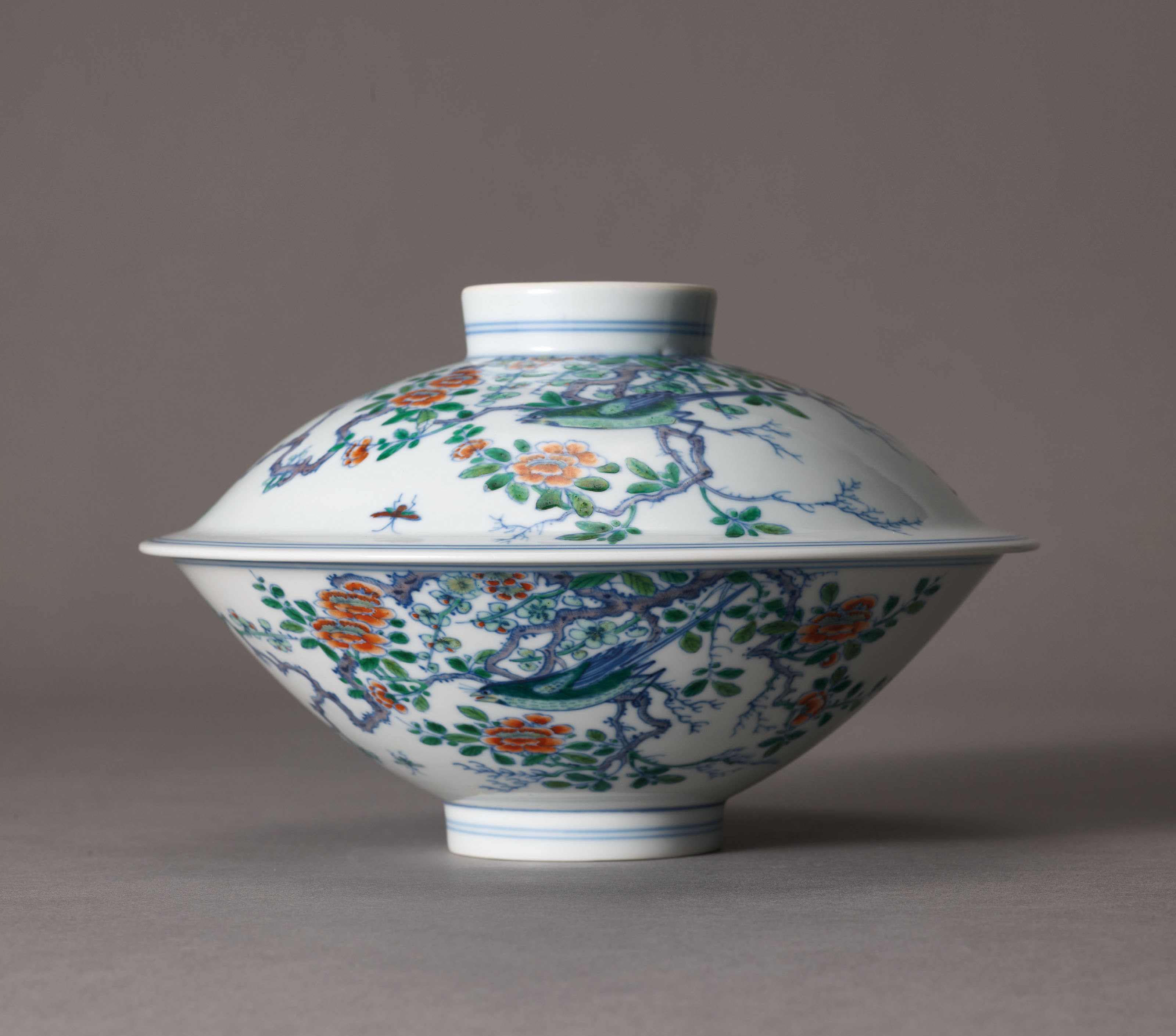 Porcelain gaiwan from Yongzhen Period(1723-1735), Diameter 20.8cm
7. Late Qing Dynasty(1736~1911): Formal Standardization
As tea-drinking practices evolved, the design of lids larger than the bowl gradually fell out of favor due to their instability and tendency to slip off. Smaller-lidded styles became popular instead. So that users could use the lid to gently skim off floating tea leaves, then tilt it slightly to sip the tea without leaves escaping—a highly convenient feature that larger lids could not achieve.
An imperial document during Emperor Tongzhi’s reign(1861~1875) explicitly noted terms like "famille rose five-color Eight Auspicious Symbols gaiwan sample" and "produce ten pairs of gaiwans and twenty tea cups according to this sample", with the desgin drafts drawn by court painters and customized to imperial preferences, serves as evidence of the standardized name and form of gaiwan.
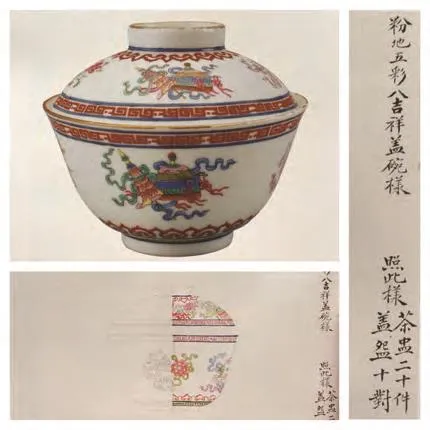 The aforementioned documents and artifacts are now housed in the Palace Museum in Beijing
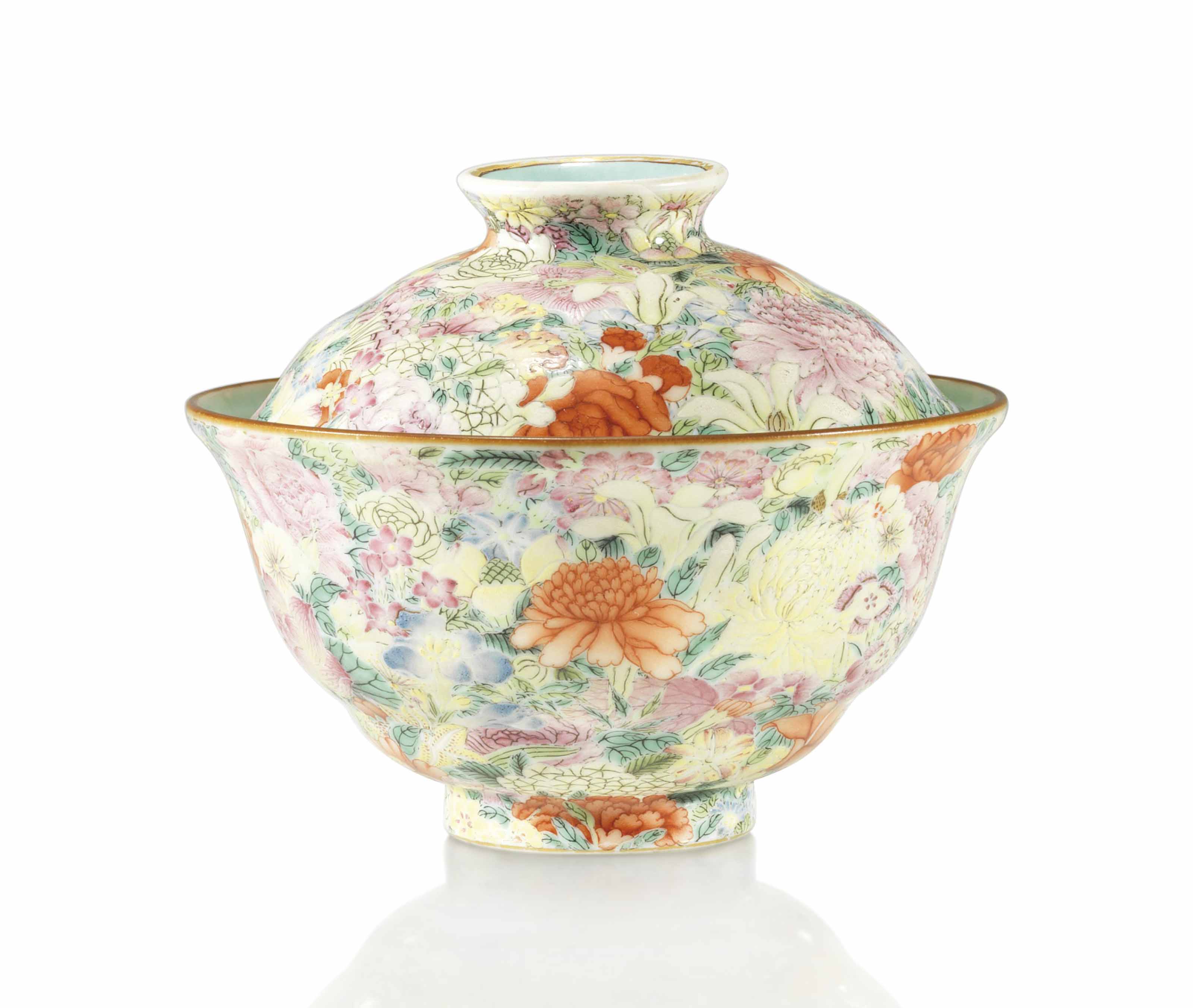 Porcelain gaiwan from Qianlong Period(1736~1796), Diameter 10.4cm
In this period, gaiwans became fashionable among the upper class, including imperial nobility, high-ranking officials, and wealthy merchants. They were mostly used in social settings such as official receptions, business meetings, and lavish banquets. Among the common folk, gaiwans were sometimes called "bureaucratic lid" (官盖), highlighting their class association. Hence, the elaborate protocols surrounding their use were deliberately emphasized—after all, the working class, preoccupied with daily survival, could scarcely afford such niceties.
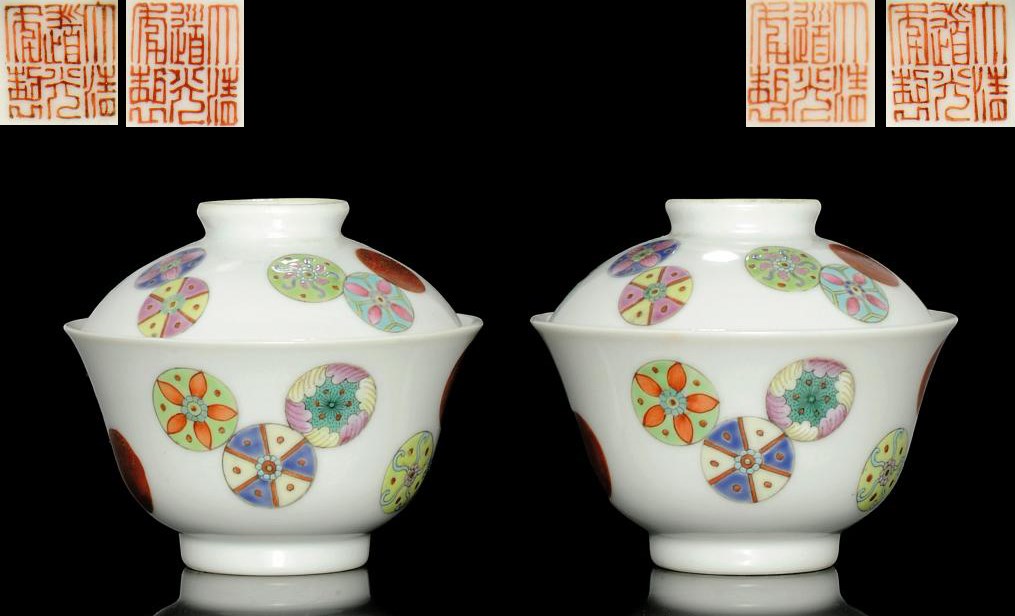 Porcelain gaiwan from Daoguang Period(1821~1850), Diameter 9.1cm
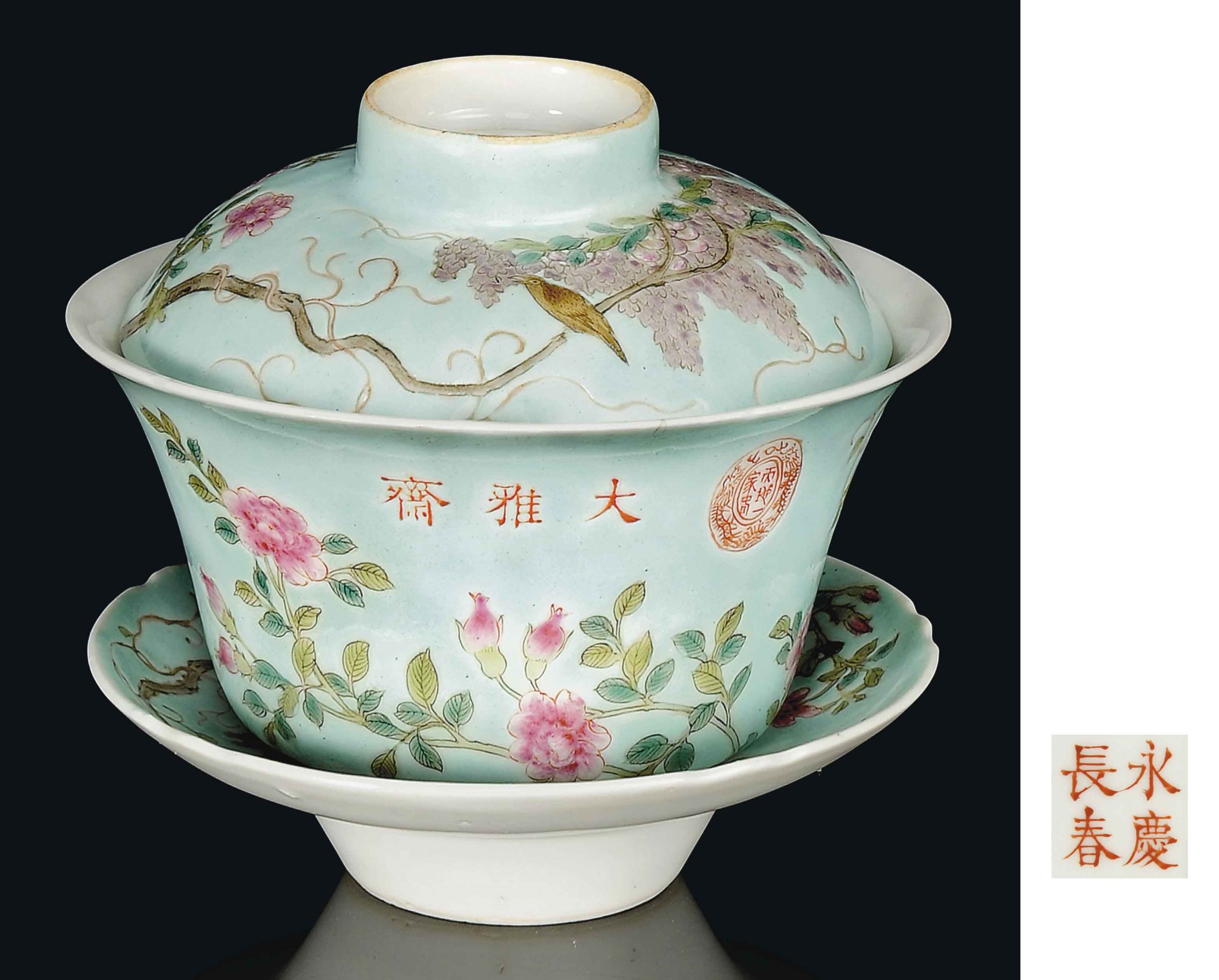 Porcelain gaiwan from Tongzhi Period(1861~1874), Diameter 10.5cm, its label shows that identifies it as a folk craft production, not an imperial commissioned piece.
Today, professional tea ceremony masters in China still hold protocols for using gaiwans. The fundamental distinction lies in their purpose: today's meticulous procedures aim solely to optimize tea fragrance and provide multi-sensory enjoyment (visual, olfactory, and gustatory), foucusing on tea itself rather than serving as tools for social stratification as in bygone eras.
8. ROC Peroid(1912~1949): The Golden Age
During the Republican era, with the collapse of feudal order, advances in productivity, and urbanization and marketization, gaiwans became fully democratized. This transformation manifested most visibly in urban teahouses, where these utilitarian wares—though crudely made compared to their imperial predecessors—flourished through affordability and mass production. Thus the once-regal accessory descended from palace salons to street-side establishments, embedding itself in plebeian culture—a tradition preserved to this day in old school teahouses in Chengdu and Beijing.
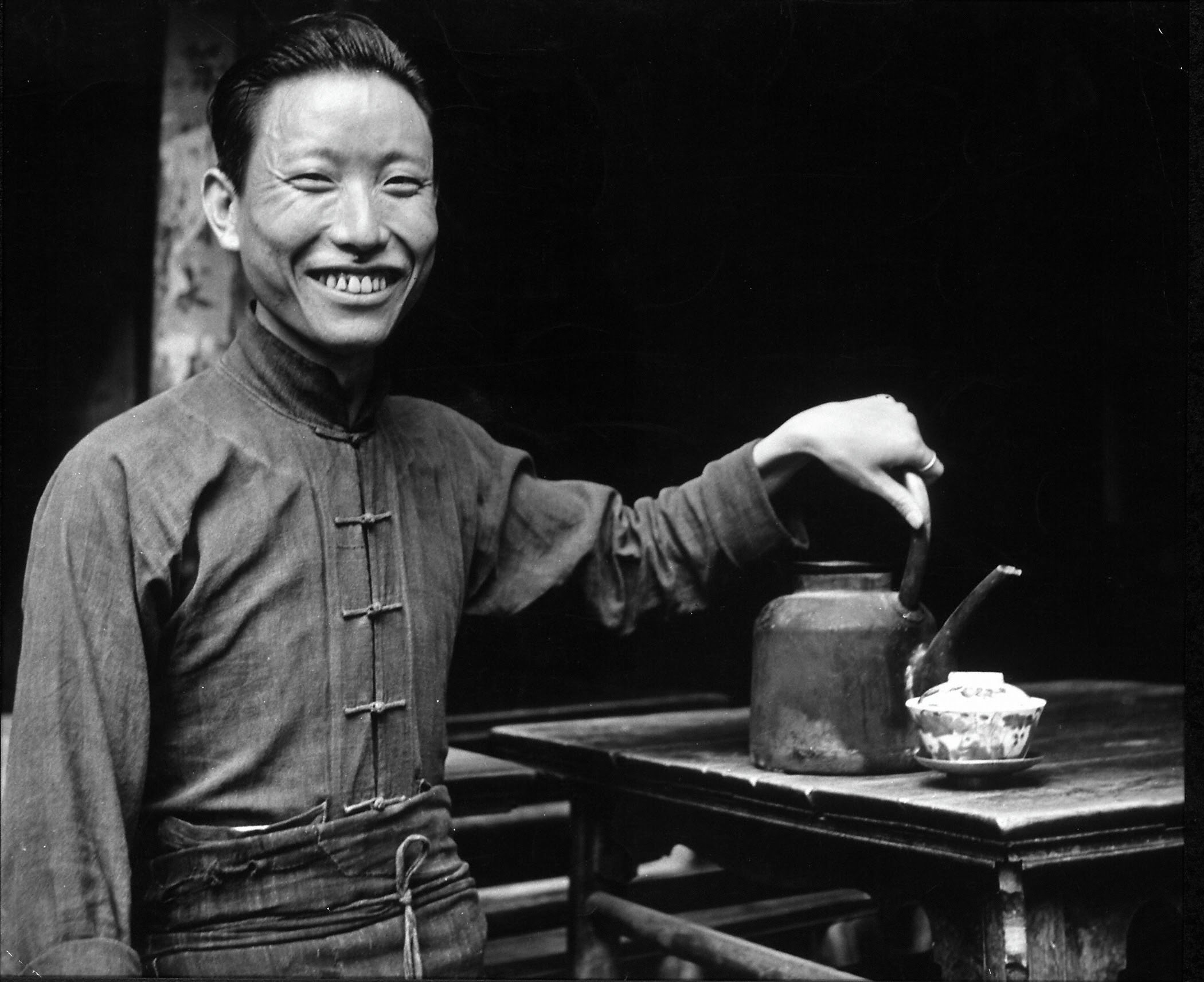 Teahouse Owner, photographed by American Life magazine journalist Carl Mydans in 1940s
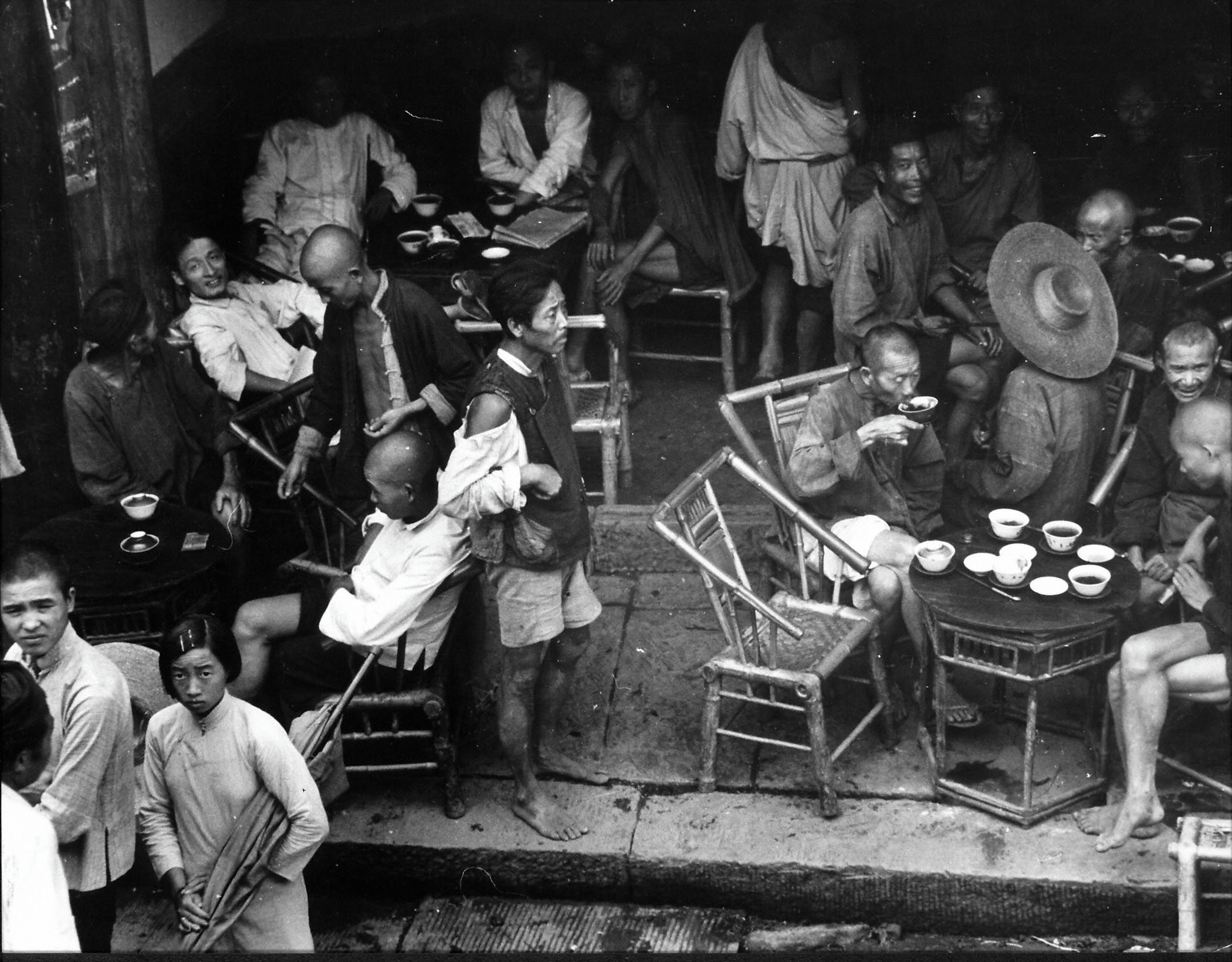
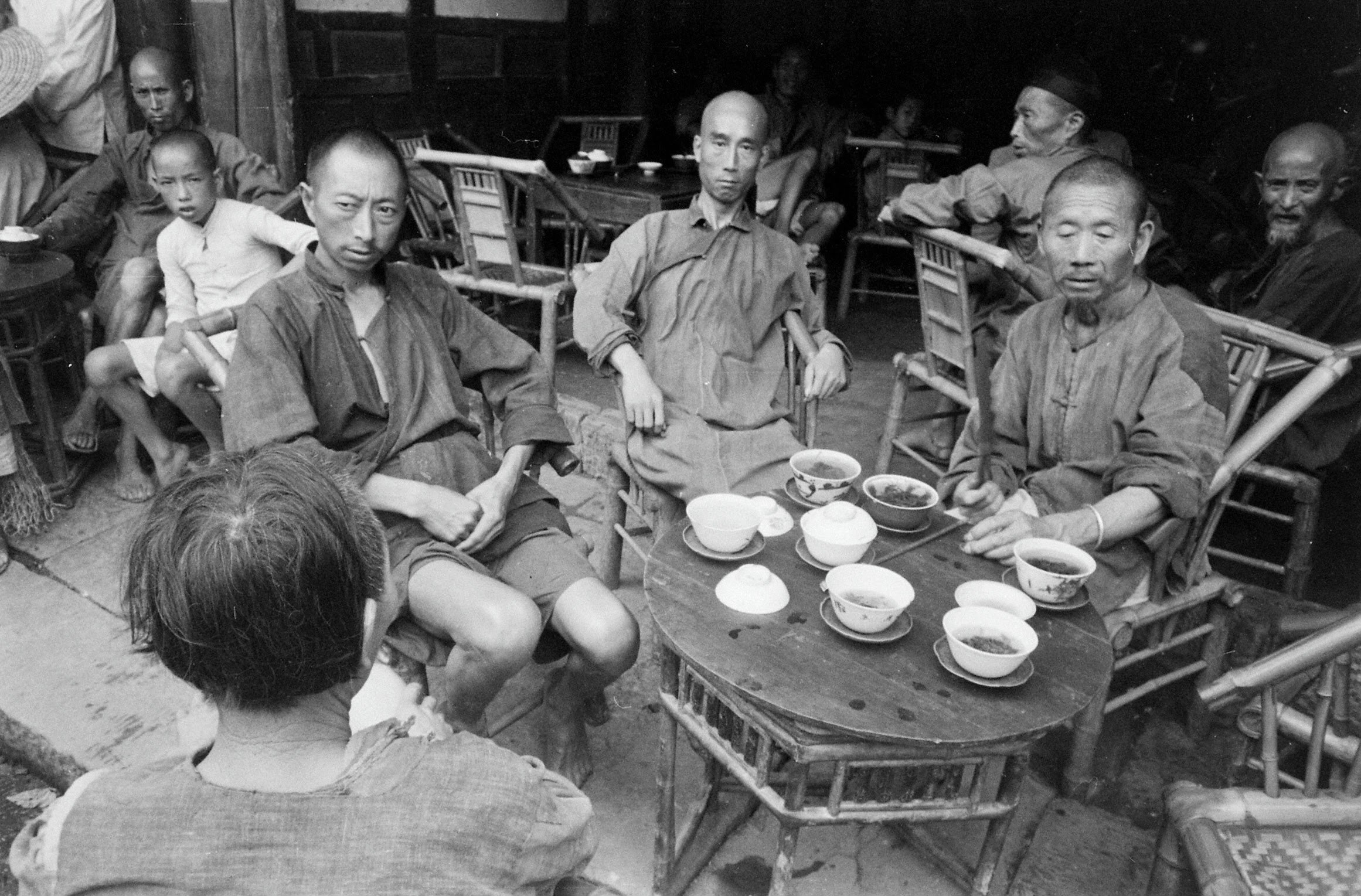
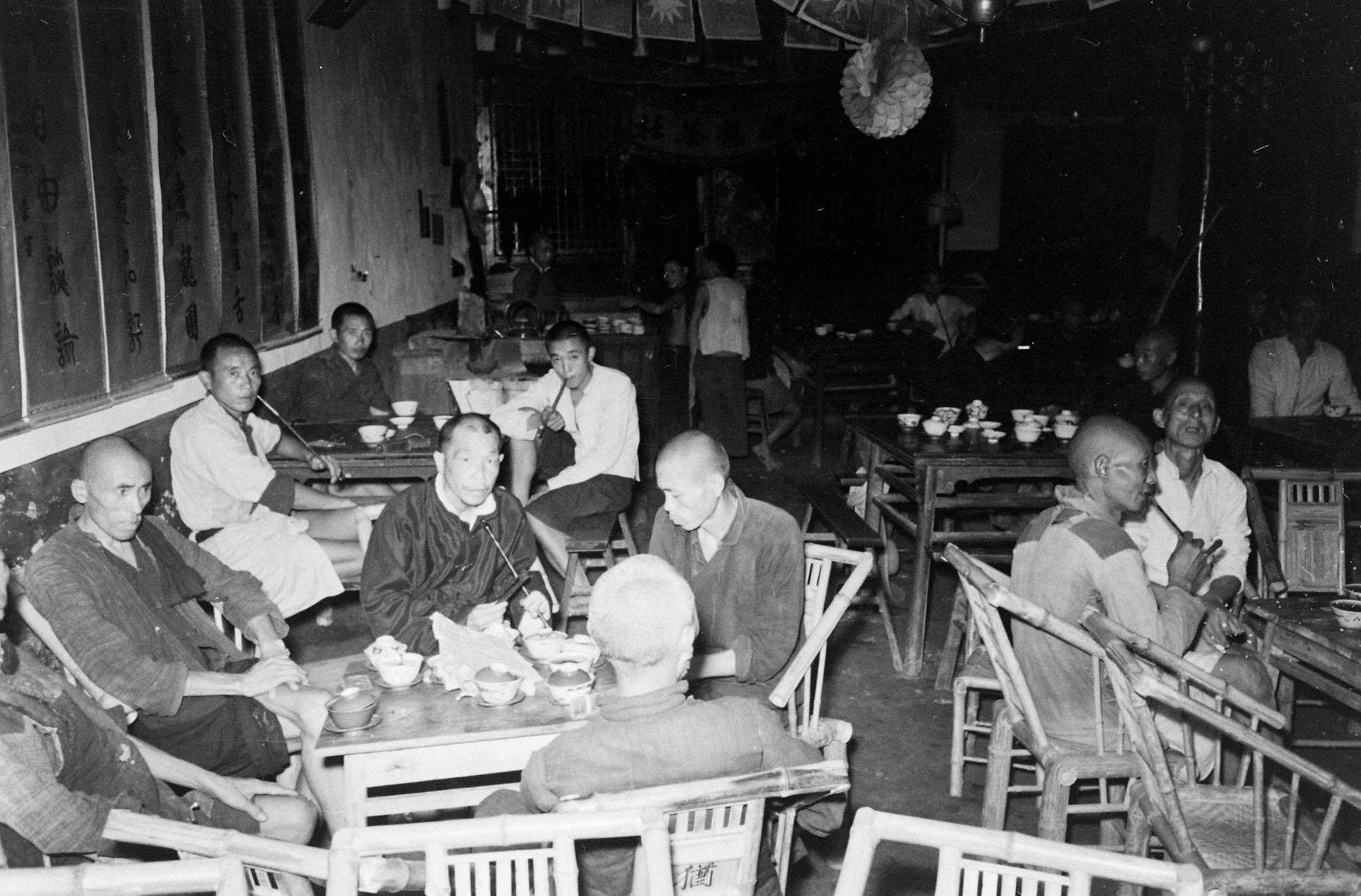 Teahouses in Chengdu, photographed by American Life magazine journalist Carl Mydans in 1940s
The accompanying rituals inevitably simplified among the populace. However, some elite circles stubbornly clung to these conventions—they could discern whether someone hailed from "old money" simply by observing the subtleties of how one lifted the lid or tilted the bowl.
In terms of design, the addition of a saucer established a fixed three-piece set. This configuration offered enhanced functionality—heat insulation for comfortable handling and spill containment. While such combinations existed during the Qing dynasty, it was the Republican era that formally standardized this design.
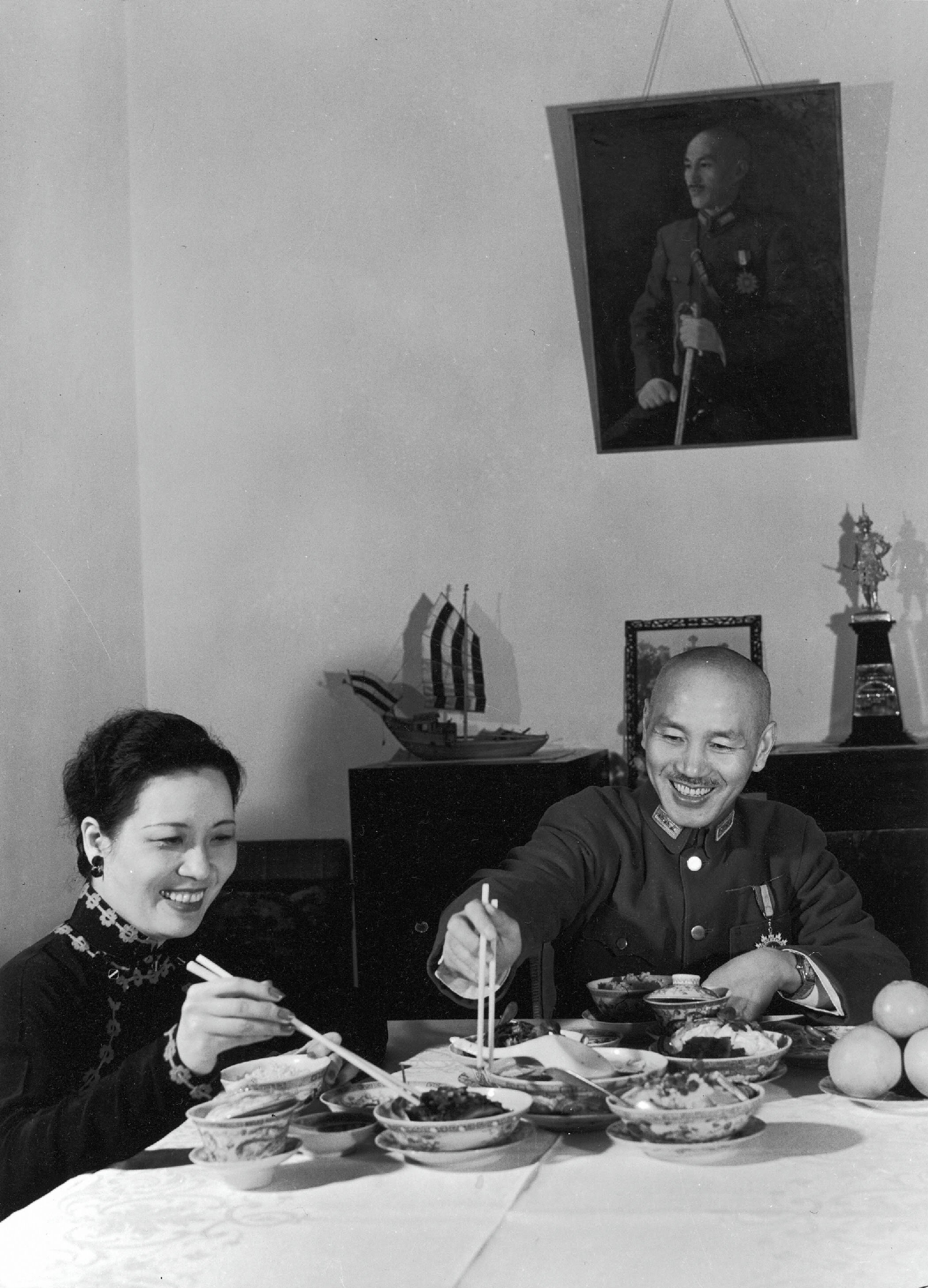 Chiang Kai-shek, the superme leader of ROC, with his wife Soong May-ling, photographed by American Life magazine journalist Carl Mydans in 1940s
This ensemble became commonly known as the "Three Talents Lidded Bowl" or "Three Talents Cup," once again demonstrating how Chinese tea culture makes little distinction between tea bowls and cups. The "Three Talents" concept stems from traditional Chinese cosmology—the lid representing heaven, the bowl symbolizing humanity, and the saucer embodying earth—their union signifying the harmony of heaven, earth, and mankind. While some might find this interpretation somewhat contrived, imbuing objects with cultural symbolism remains a deeply rooted tradition in Chinese history.
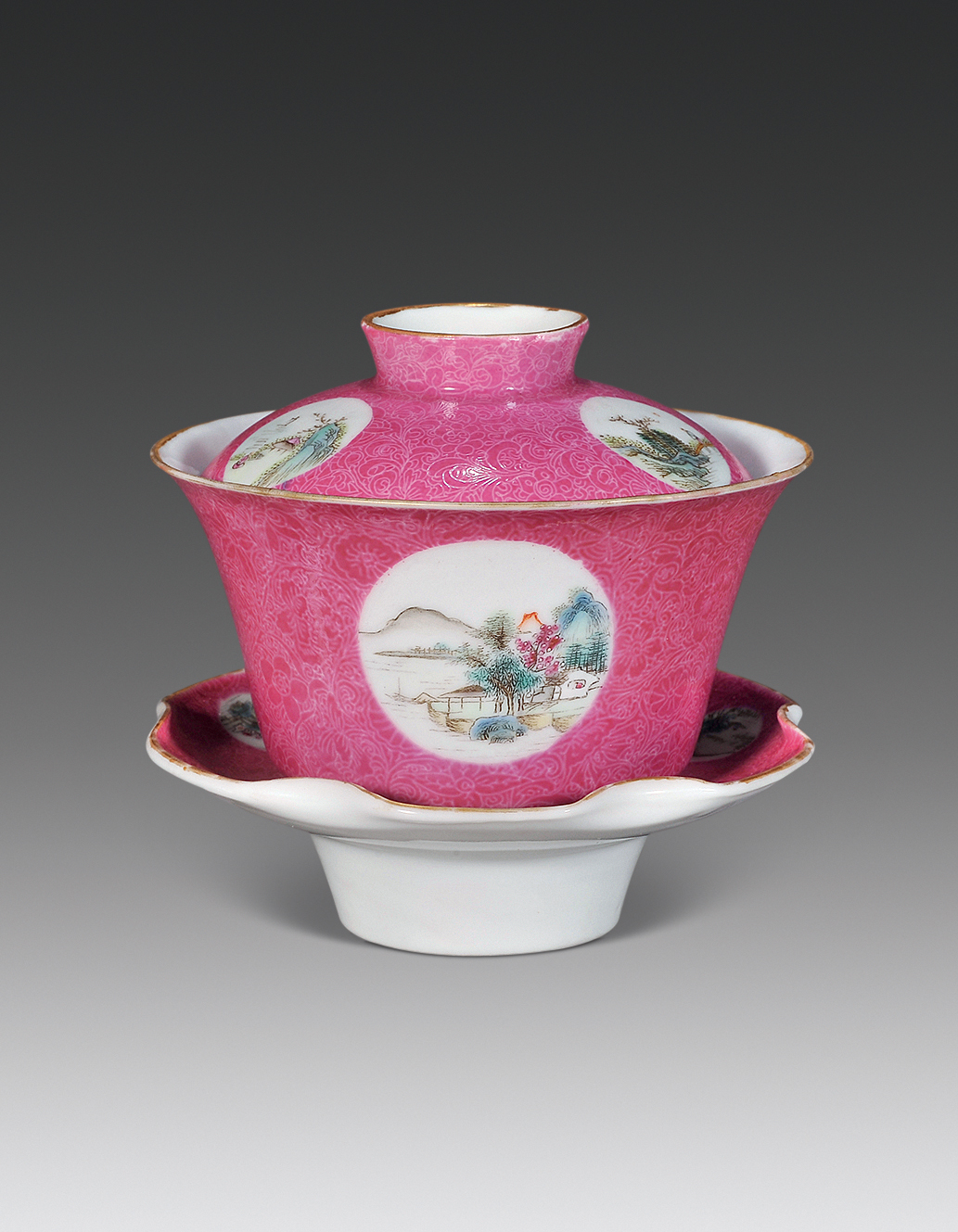 Porcelain Gaiwan From ROC Period
Amidst the chaos of war and social upheaval at the time, gaiwans showed little innovation in decoration or craftsmanship—a quiet reflection of China's struggling ceramic industry. But by sheer ubiquity alone, this period undoubtedly marked the golden age of the gaiwan.
9.PRC(1949~Present): Decline and Reborn
After the founding of the People’s Republic of China, gaiwans got kicked out of official government settings—replaced by its modern rival: the lidded mug(盖杯). Honestly, this trend started even earlier, back in the Republican era. Why? Simple: mugs were cheaper, bigger, and way more convenient. Plus, those fancy gaiwans? Totally last dynasty. They reeked of old feudal rituals, while the new socialist era was all about efficiency, equality, and no-nonsense practicality.
Picture this: A grand hall of Congress, buzzing with hundreds of politicians—each holding a delicate gaiwan, pinkies out, sipping tea like 18th-century aristocrats. Waiters dart between them, constantly refilling hot water (because let’s be real, 150ml is basically two or three polite sips). Tea leaves swapped, lids delicately adjusted… all while debating five-year plans and socialist reforms. Yeah, not happening.
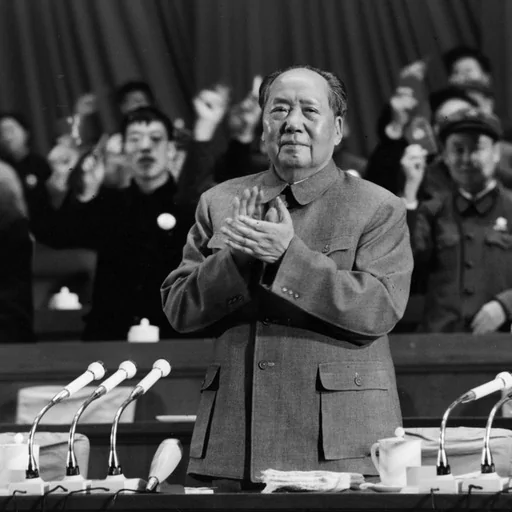 Whether in domestic or diplomatic high-level meetings, lidded mugs could always be found on the desks of Chinese leaders
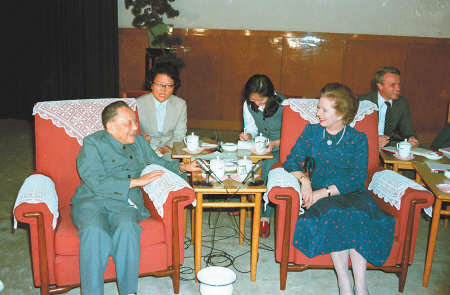 1980s—Chairman Deng met with UK Prime Minister Margaret Thatcher
And it wasn’t just the government. Regular folks ditched the gaiwans too. Under the impact of socialist revolution, the traditional feudal aristocracy and bourgeoisie gone, urban teahouses dwindled, and people were more efficiently organized in factories and field, too busy to fuss with delicate tea rituals.
By the 1960s, only a few nostalgic holdouts—old-school teahouses, restaurants, and families—still insisted on gaiwans. They seemed to be on the verge of becoming a museum relic.
And it wasn’t just the government. Regular folks ditched the gaiwans too. Under the impact of socialist revolution, the traditional feudal aristocracy and bourgeoisie gone, urban teahouses dwindled, and people were more efficiently organized in factories and field, too busy to fuss with delicate tea rituals.
By the 1960s, only a few nostalgic holdouts—old-school teahouses, restaurants, and families—still insisted on gaiwans. They seemed to be on the verge of becoming a museum relic.
Fun fact: China actually produced mugs way back in the 17th century—but they were custom orders for export only! Locals at that time thought they were clunky and tasteless.
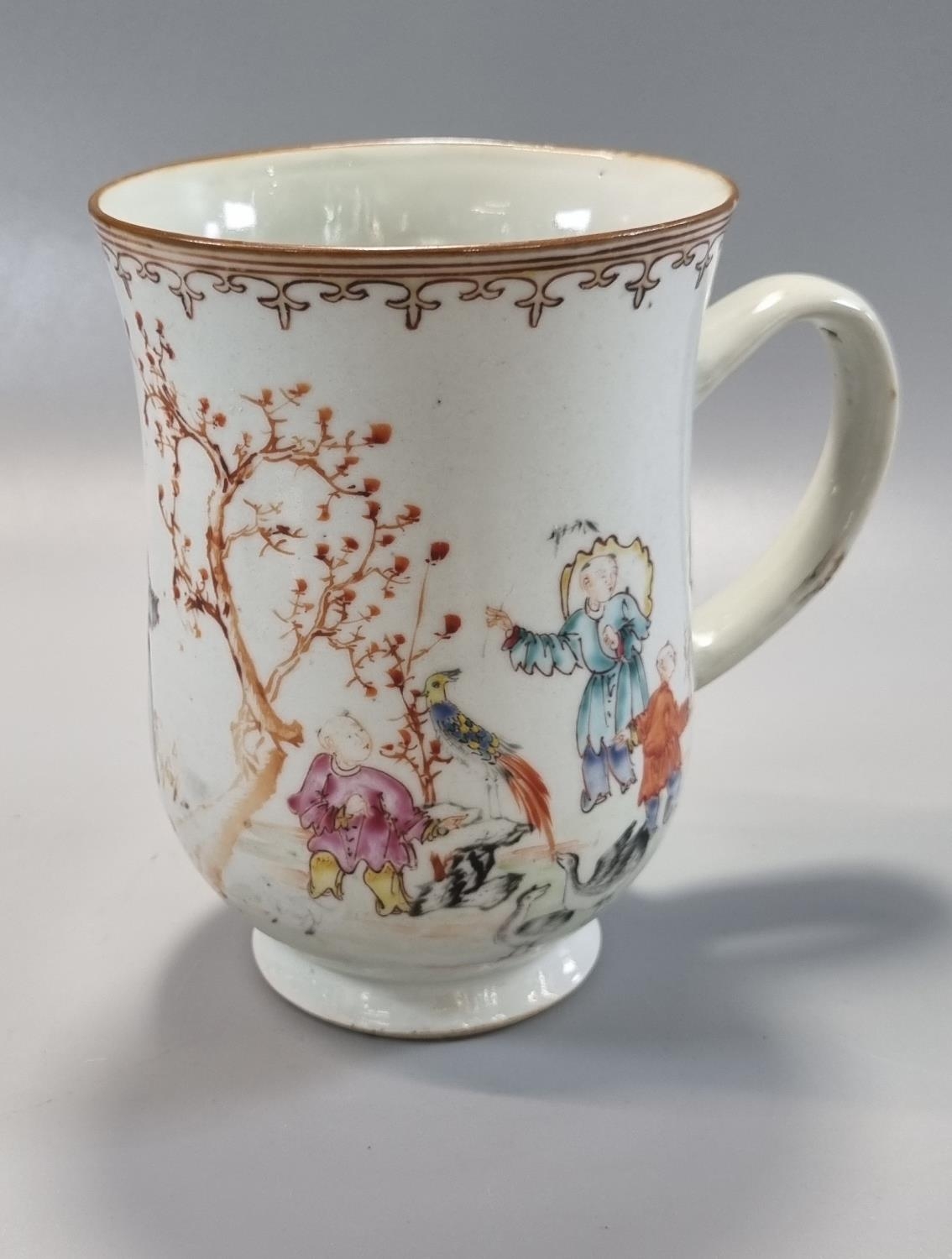 Porcelain mug made in 18th century exported to Europe
.jpeg?w=720&h=606)
Lidded mugs customized by the central government in the 1950s–60s, named "Victory Cups," remain in China government settings today
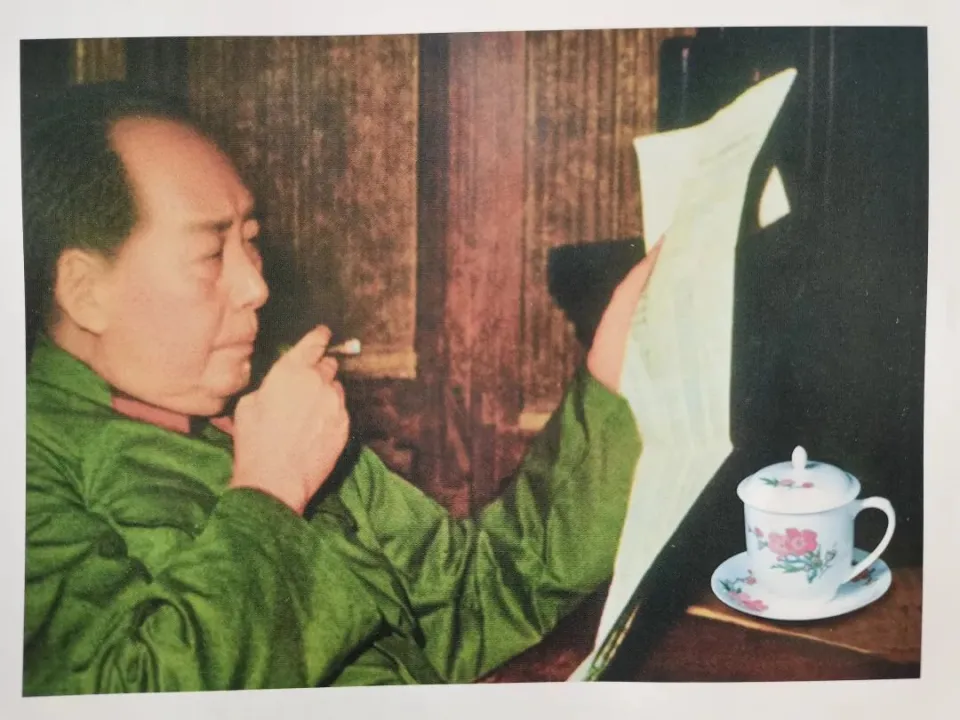
Chairman Mao with his "Victory Cup"
It wasn’t until the 1970s–80s that gongfu tea lovers in southeast(Guangdong, Fujian, Taiwan) got into the habit of replacing Yixing teapots with gaiwans as the the primary brewing vessel. Sure, it wasn’t a new idea(never doubt Chinese ingenuity in food and drink), but now it had a comeback story: elegant, functional, and delightfully retro—a true tea-naissance.
There was also a practical reason: during China’s planned economy in 1950s~70s, the supply of Yixing teapots was insufficient, as they were often exported to earn foreign currency. Small workshops were integrated into large state-owned factories prioritizing mechanized production of daily-use ceramics. So unlike today, you can rarely found small porcelain teapots suitable for gongfu tea at that time. Though production dwindled and primarily served export markets, the gaiwan's earlier mass adoption at least ensured its enduring presence. From this perspective, gaiwans were also a choice of necessity.
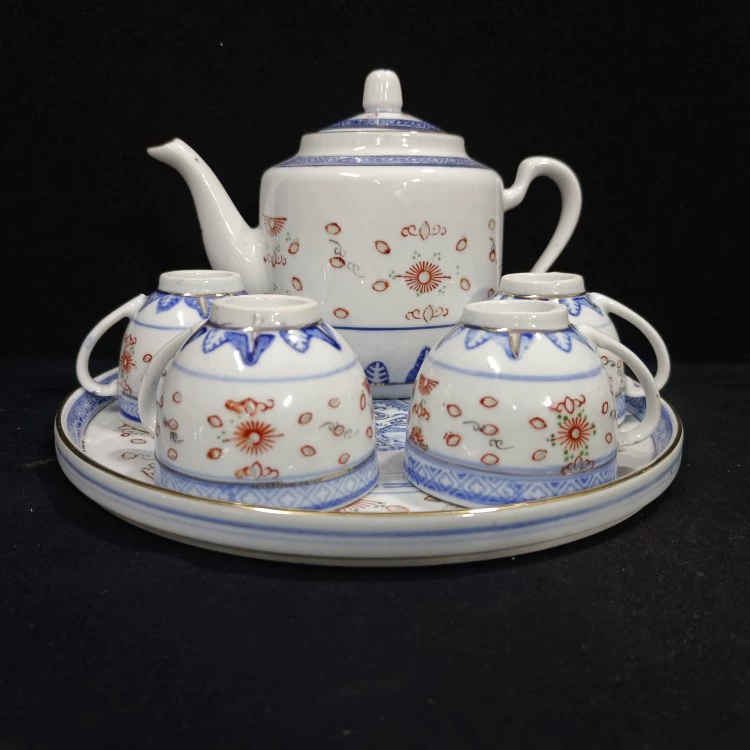 While state-owned ceramic factories mass-produced porcelain teapots like this in the 1960s-70s, they are just wrong for gongfu tea in both capacity and aesthetics
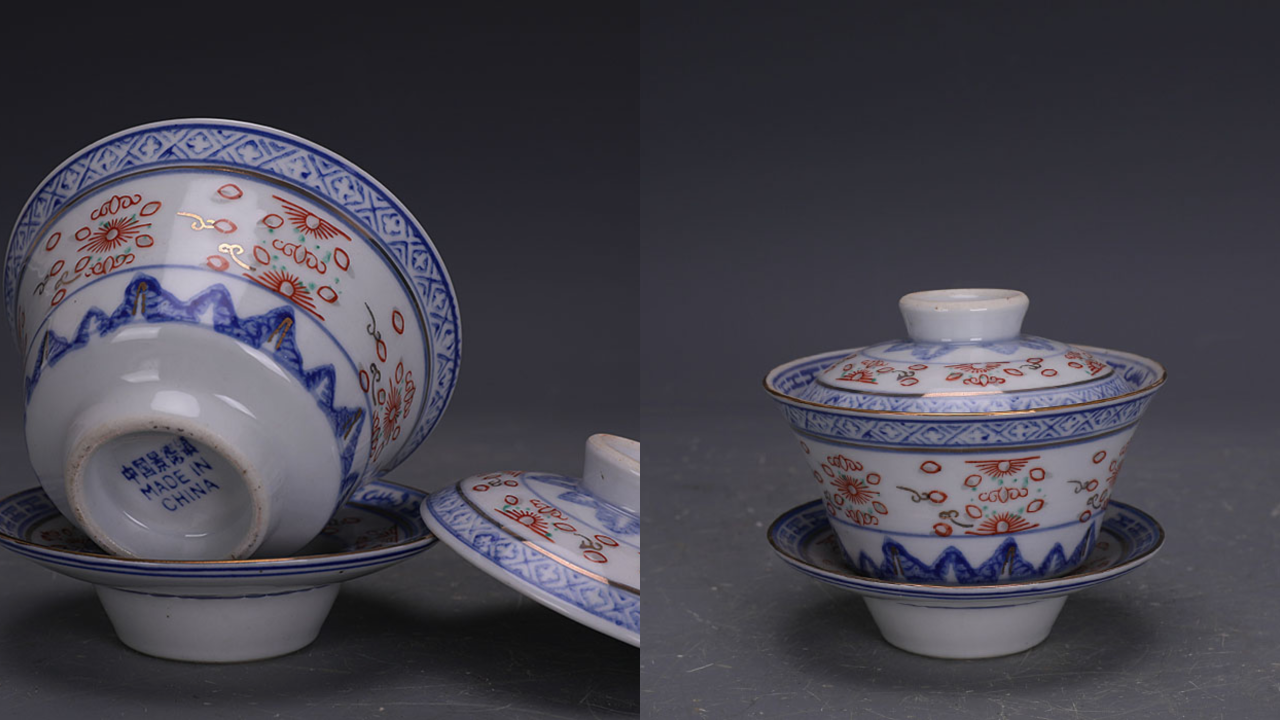 Gaiwan made in 1970s for export
Since the 1980s, with China’s reform and opening-up and economic boom, more and more people grew dissatisfied with "ordinary" tea drinking with lidded mugs or glasses, turning instead to the more refined gongfu tea. Although ceramic workshops and independent potters re-emerged, offering an unprecedented variety of tea wares, gaiwans secured a firm niche thanks to their inherent advantages. Accepted as a primary brewing vessel by Gongfu tea enthusiasts, and with Gongfu tea’s global spread, this once-fading classic is living its new life.
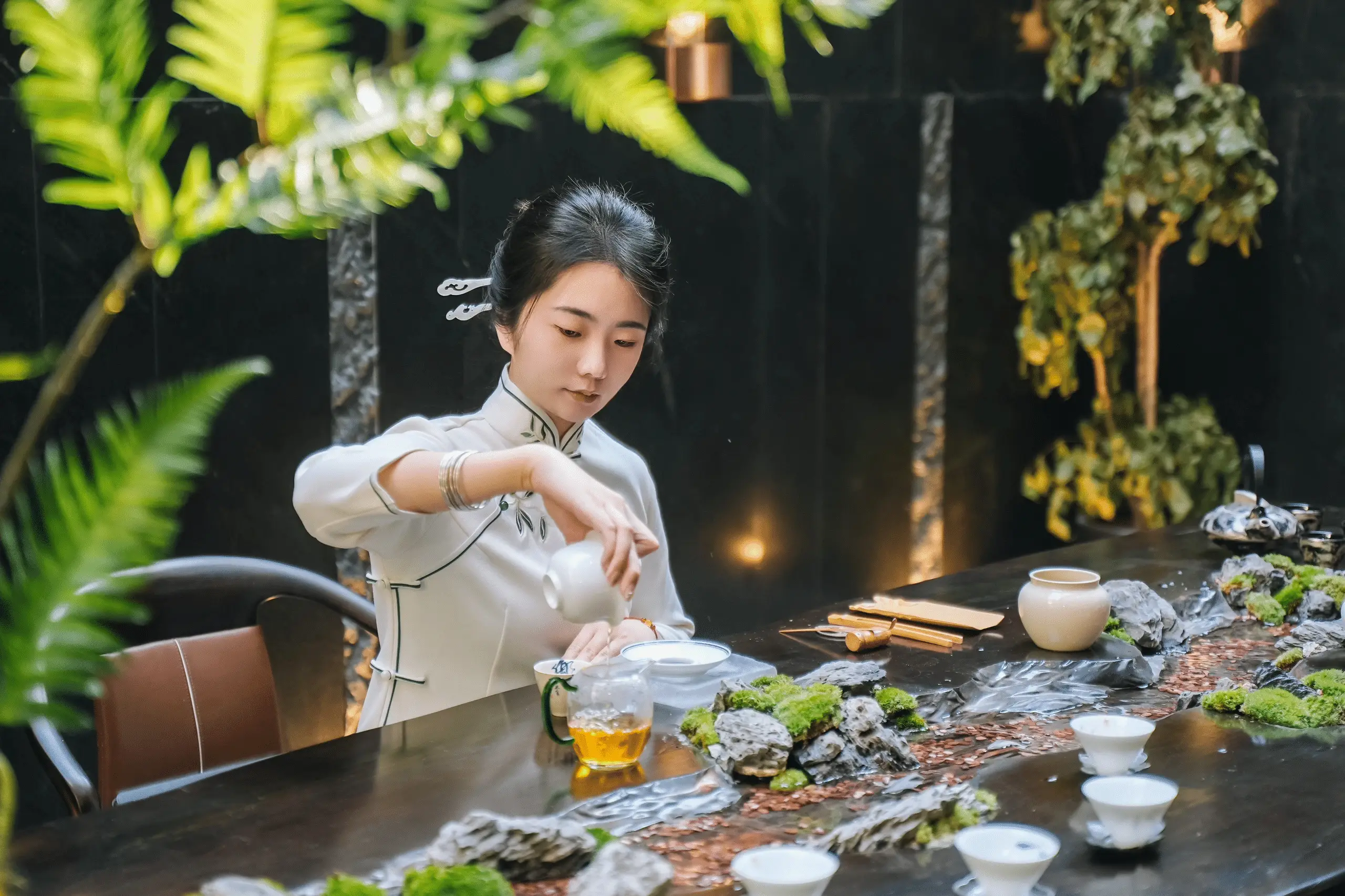 In professional tea ceremony demonstrations and tea evaluation sessions, gaiwans are widely adopted as the primary brewing vessel. Compared to Yixing clay teapots, gaiwans allow for clearer observation of tea leaves and are compatible with a broader range of tea varieties
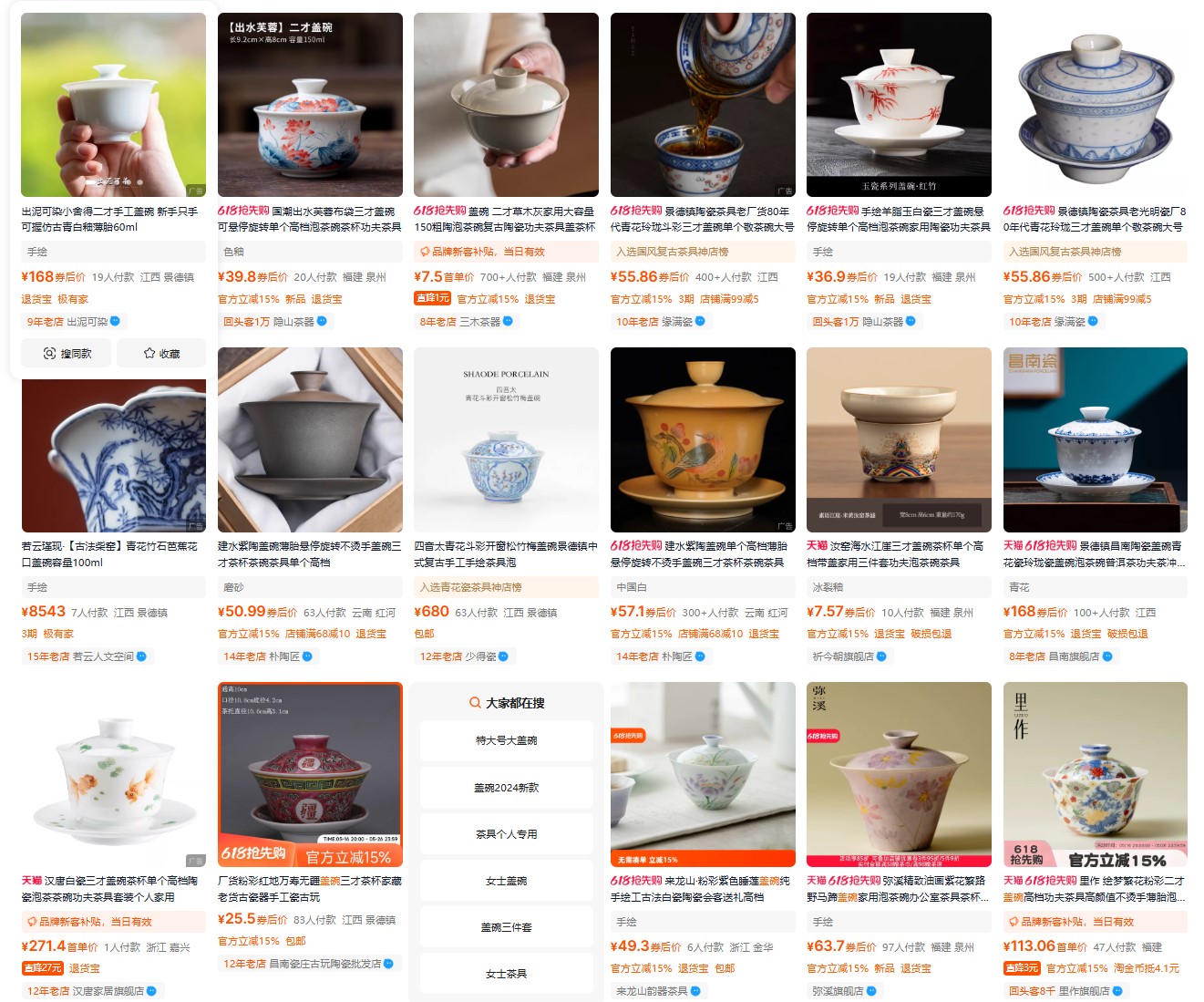
Today, thanks to advancements in production technology and growing market demand, the diversity of gaiwans available has reached an new level. Want one that looks like it time-traveled from the Ming dynasty? Check. A minimalist hipster version for your Instagram tea shots? Double check. Whether your wallet says ‘$10 thrift store chic’ or ‘$1000 imperial tribute replica’, there’s always a perfect gaiwan soulmate waiting for you, the only problem is decision fatigue.