.png?w=1280&h=354)

1. Classical & Contemporary
I've always considered the gaiwan to be the most quintessential Chinese tea vessel - so unique that nothing quite like it exists in other countries. Hand a gaiwan set to a foreigner unfamiliar with Chinese tea culture, and they'll likely be utterly perplexed about how to use it.
The most famous example occurred during the 2016 G20 summit when President Obama demonstrated the "wrong" way - simply grabbing the bowl and and taking big gulps. In contrast, President Xi showcased the standard process: holding the saucer with one hand, pinching the lid's knob with the other, gently skimming the foam, then tilting the lid to sip slowly and elegantly.
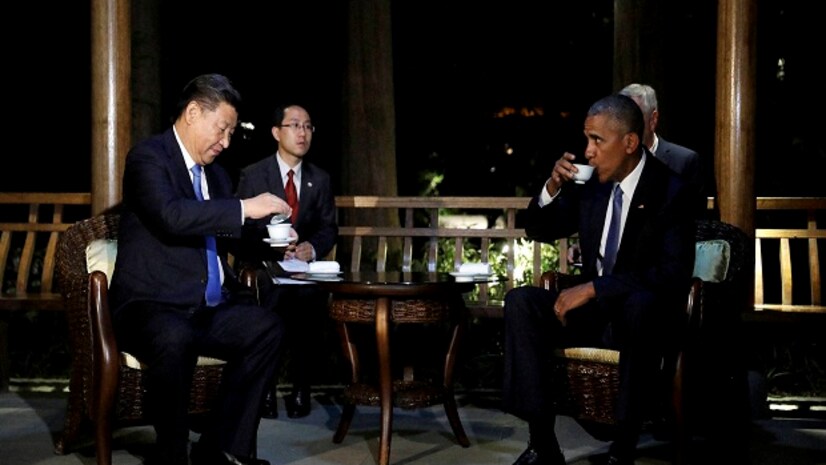 President Obama’s way of drinking isn’t uncommon among Chinese people, but it’s normally considered impolite in formal public settings
Serving guests with individual gaiwans—each filled with tea leaves and hot water (akin to a mug with a tea bag and saucer)—requires graceful and composed movements and demeanor. This is both the stereotypical image most Chinese have of the gaiwan (thanks to period dramas set in the Qing Dynasty and Republican era) and a rather retro way of using it. Today, gaiwans are mostly treated as pure tea brewers, replacing teapots, rather than serving as a solo all-in-one brewing-and-drinking vessel.
.gif?w=320&h=320&_f=1)
The most textbook gaiwan usage depicted in film/TV
.gif?w=320&h=320&_f=1) Repeatedly skimming foam as a guest is impolite (implies inferior tea quality); completely removing the lid while drinking is also inelegant
Repeatedly skimming foam as a guest is impolite (implies inferior tea quality); completely removing the lid while drinking is also inelegant
How did the gaiwan originate and evolve? Why did its usage change? How to select a proper gaiwan? Must modern gaiwans include saucers?
Though the true gaiwan emerged only in the Qing Dynasty(1644~1911) - making it the youngest tea ware among China's 2,000-year tea history - answering these questions requires tracing its developmental journey chronologically.
2. Tea Bowls vs. Tea Cups
In Chinese, the term "盖碗" (gaiwan) literally means "lidded tea bowl." Such lidded bowl-shaped vessels actually appeared very early in history. However, most of these early versions were quite large, clearly designed for holding soups or food—making them serving or storage vessels rather than tea wares.
Before the Tang Dynasty, tea was a niche beverage (often treated as an ingredient, seasoning, or even medicine), and there was no standardized set of specialized tea ware, with most people repurposing dining or drinking vessels instead.
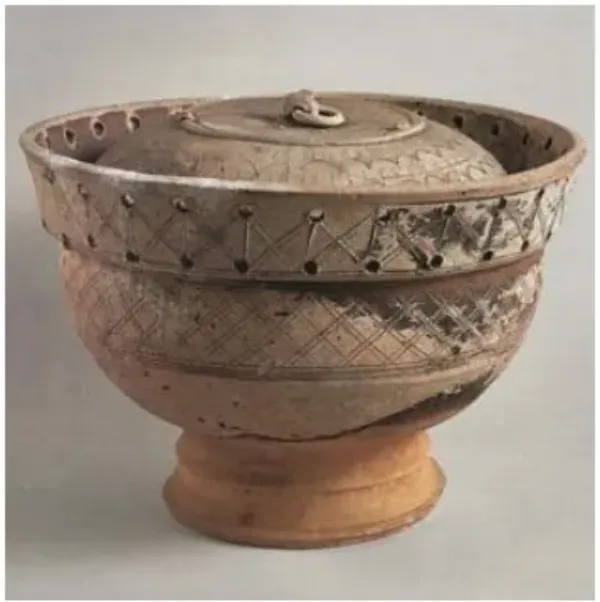 A Han Dynasty lidded bowl(202 BC – 220 AD , diameter 30cm, obviously it's not gaiwan(lidded tea bowl)
The concept of a "tea bowl" (茶碗) is rarely discussed in modern Chinese tea culture. Historically, there was no clear distinction between "tea bowls" and "tea cups" in terms of shape, size, function, or even naming. In ancient China, both were mostly referred to as "盏" (zhǎn) or "瓯" (ōu), with slight variations depending on the era and region. The term "茶杯" (tea cup) didn’t even emerge until the 17th century.
This ambiguity partly stems from handled cups not becoming common in China until the 20th century. For clarity, this article categorizes antiques as: bowls (>10cm diameter) and cups (<10cm).
3. Tang Dynasty(618~907): Origins of Specialized Teaware
During the Tang Dynasty, tea drinking became a social trend, leading to the emergence of dedicated tea wares. The two main types of tea vessels from this period were:
Large Tea Bowls – Most had diameters exceeding 20 cm and were for communal use. At tea parties, tea was boiled in a pot (with tea leaves ground into powder beforehand) and then ladled into these bowls. Since there were fewer bowls than drinkers, participants would drink and pass them around —a practice called "行茶" (xíng chá). For example, Lu Yu’s The Classic of Tea suggested using three bowls for five people and five bowls for seven. While this may seem unhygienic by modern standards, it reflects the bold and open social customs of the Tang era.
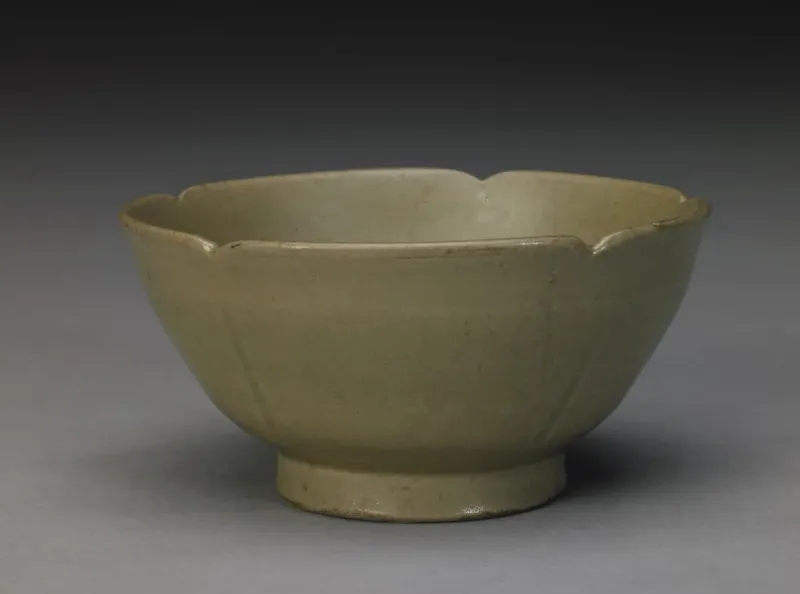 A Tang Dynasty celadon tea bowl, diameter 21.5 cm
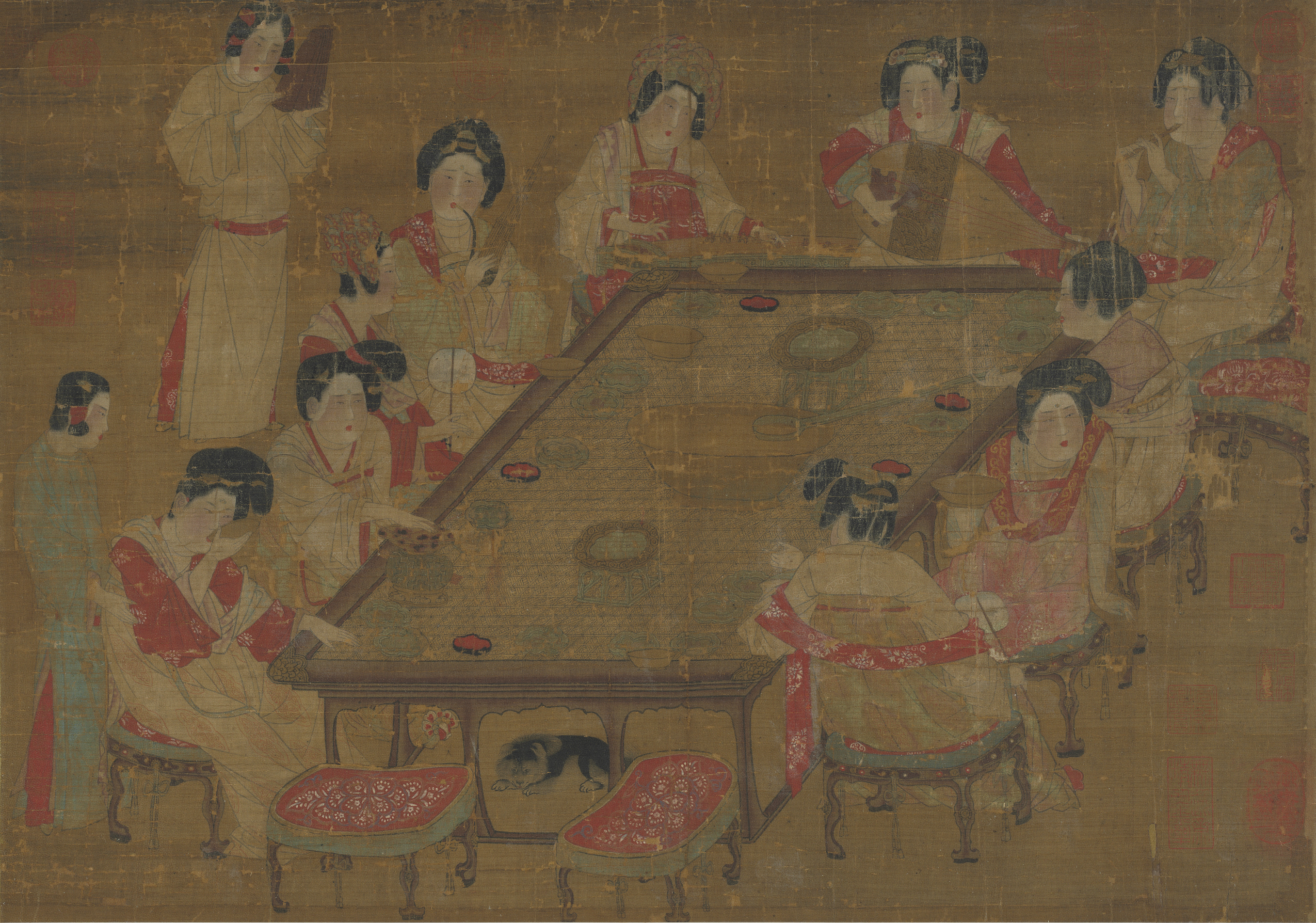 Palace Ladies at Tea (Tang Dynasty), depicting a tea party in the palace—note the large tea bowls in the ladies' hands
Compact Tea Bowls – These still measured 10~15 cm in diameter, still much larger than today’s gongfu tea cups. They were used for solitary drinking or small groups and often featured ornate designs. Many were paired with saucers to prevent burns.
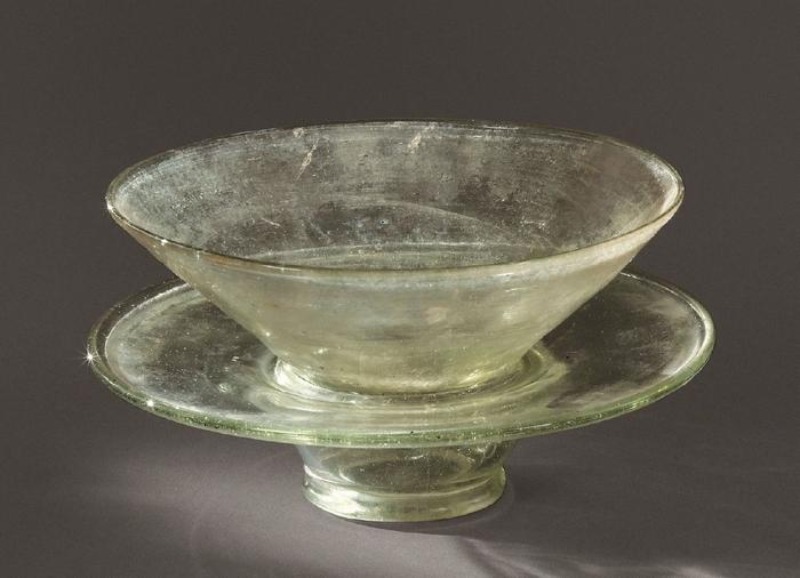
A Tang Dynasty glass tea bowl with saucer, diameter 15 cm
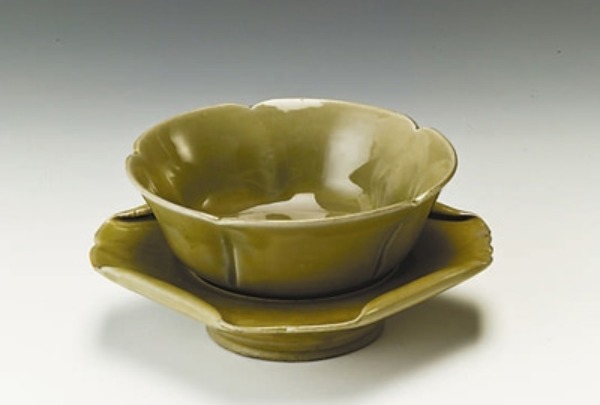
A Tang Dynasty celadon tea bowl with saucer, diameter 11.7 cm
Both types were purely drinking vessels, not brewing tools. After all, tea was boiled instead of brewed at that time as mentioned above.
4. Song Dynasty(960~1279): The Rise of Saucers
During the Song Dynasty, whisked tea (similar to Japanese matcha) replaced boiled tea. Tea bowls evolved into dual-purpose brewing/drinking vessels, with smaller bowls and cups appearing.
Both bowls and cups typically paired with saucers or stands - sometimes fused together. Beyond practicality, this reflected Song aesthetics emphasizing elegance and visual refinement.
The famous Jianzhan bowls flourished during this period. Original Song versions (10-15cm diameter) were larger than modern reproductions to accommodate whisking tools while still being comfortably held for drinking.
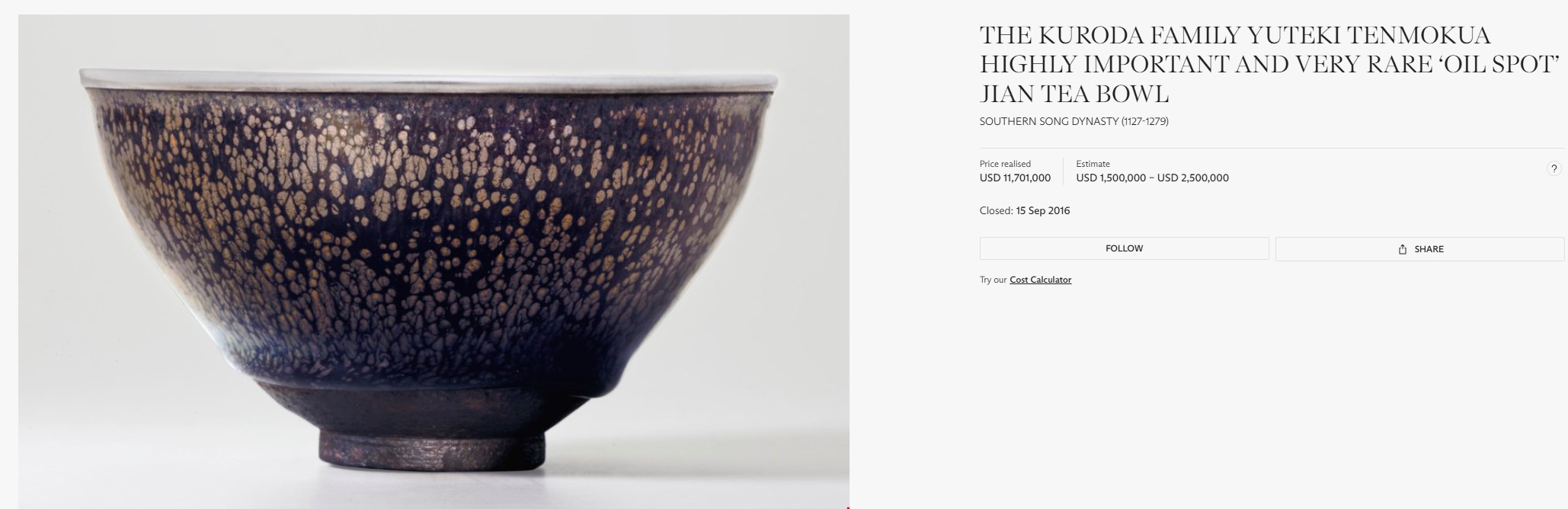 A Song Dynasty Jianzhan bowl auctioned for >$10M, diameter 12.2cm
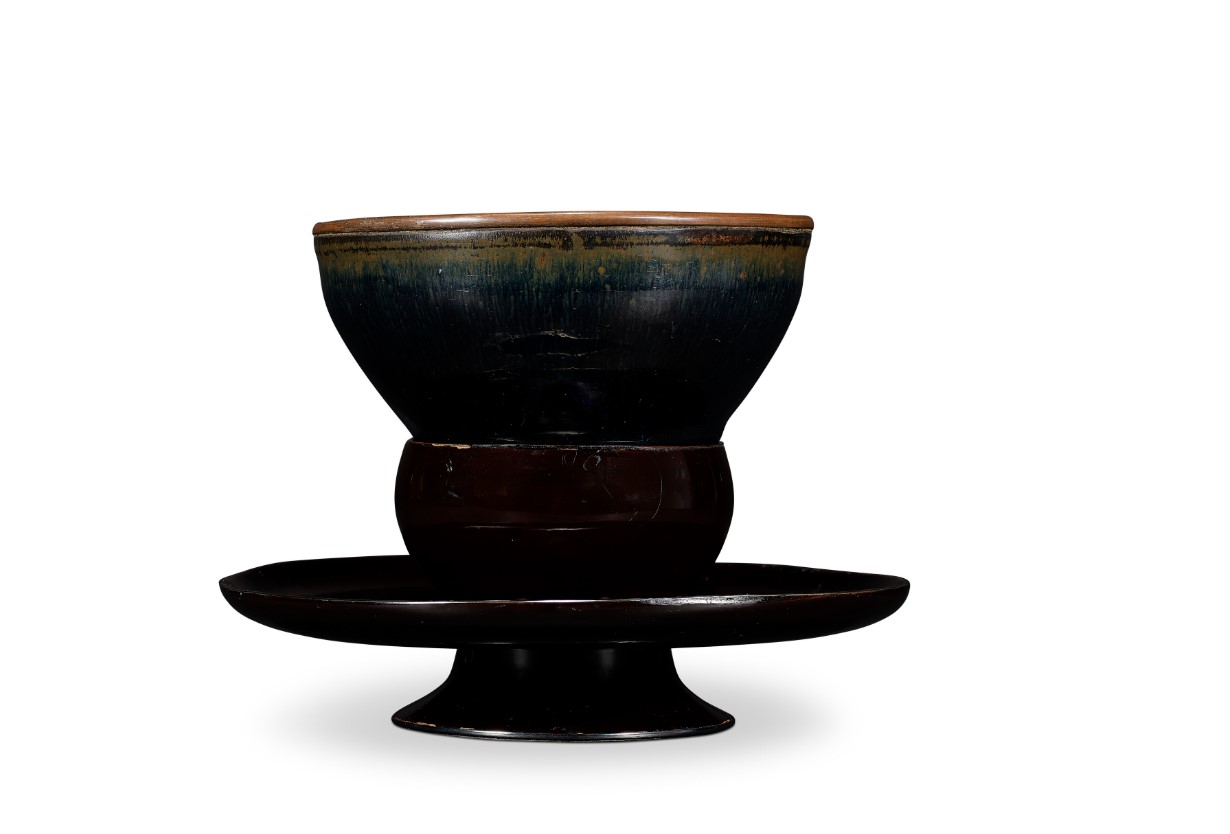
A Song Dynasty Jianzhan bowl with stand, diameter 12cm
.gif?w=568&h=320&_f=1)
Modern retro of Song Dynasty tea whisking, impossible to do this in small cups apparently
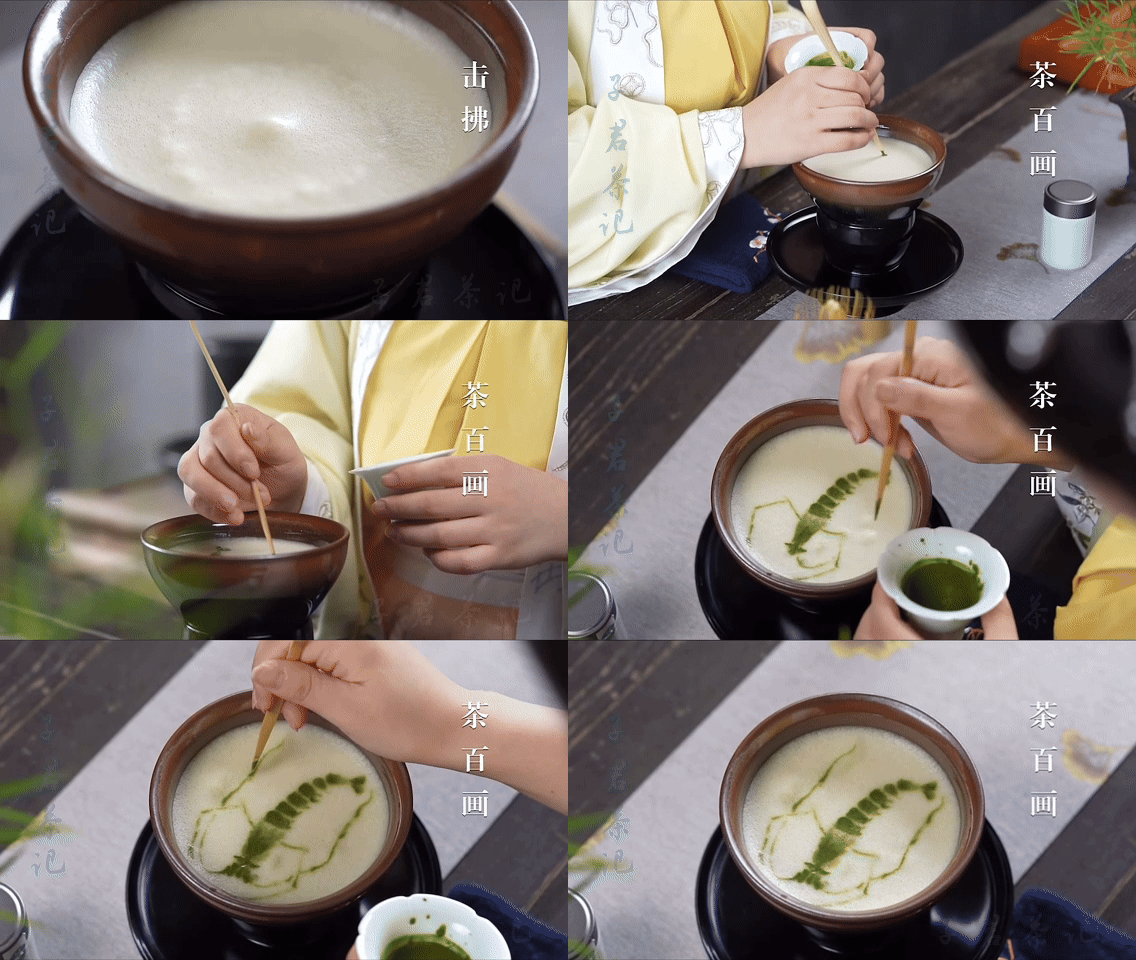
Compared to Japanese matcha, Song tea whisking emphasized thicker, white foam and final deco similar to Latte Art
Large tea bowls remained in use but functioned differently—no longer for communal drinking, but as giant "tea pots": tea powder was whisked in the large bowl, then ladled into individual cups.
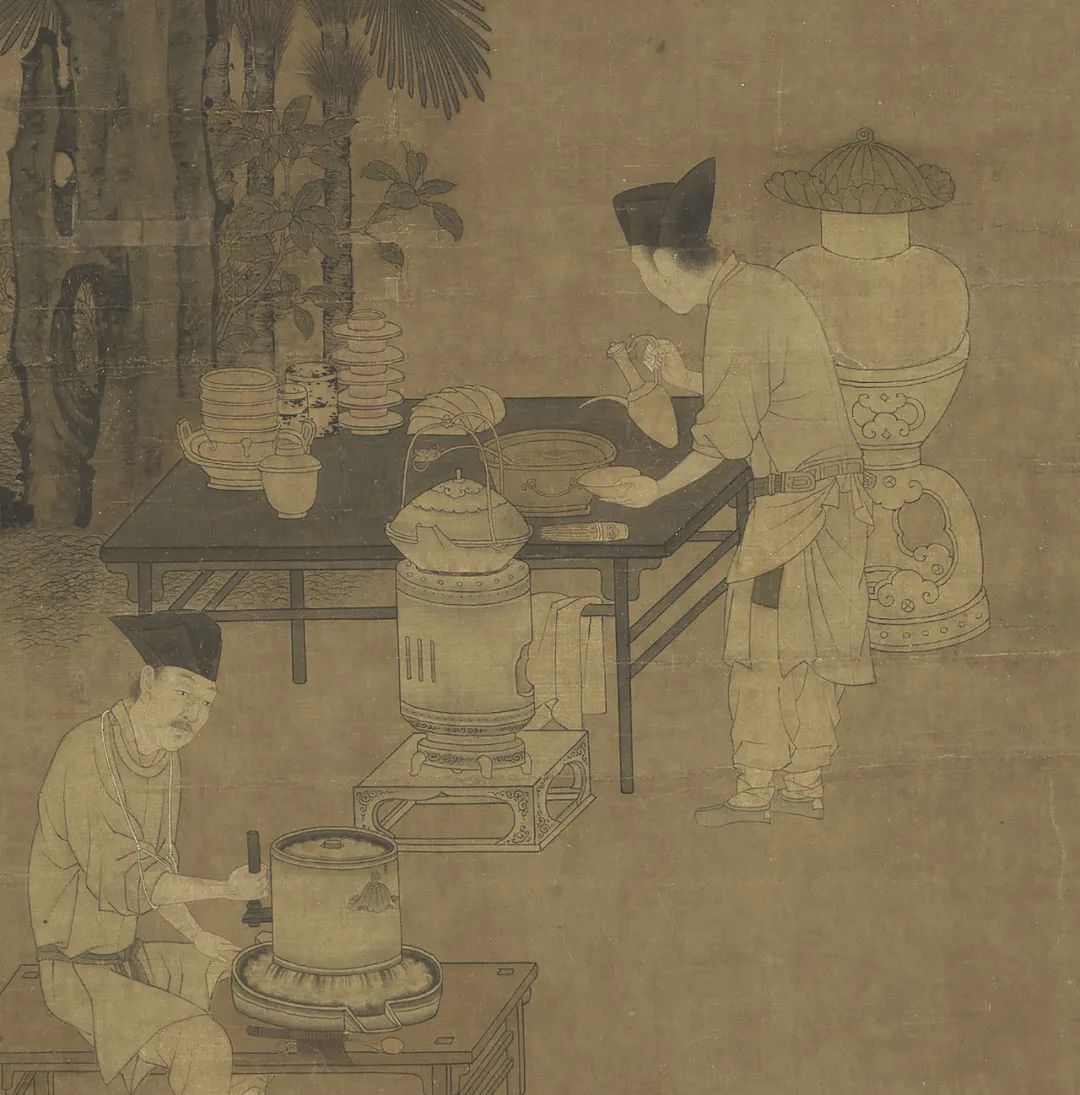 Grinding Tea (Song Dynasty painting), showing a giant tea bowl and stacked cups with saucers
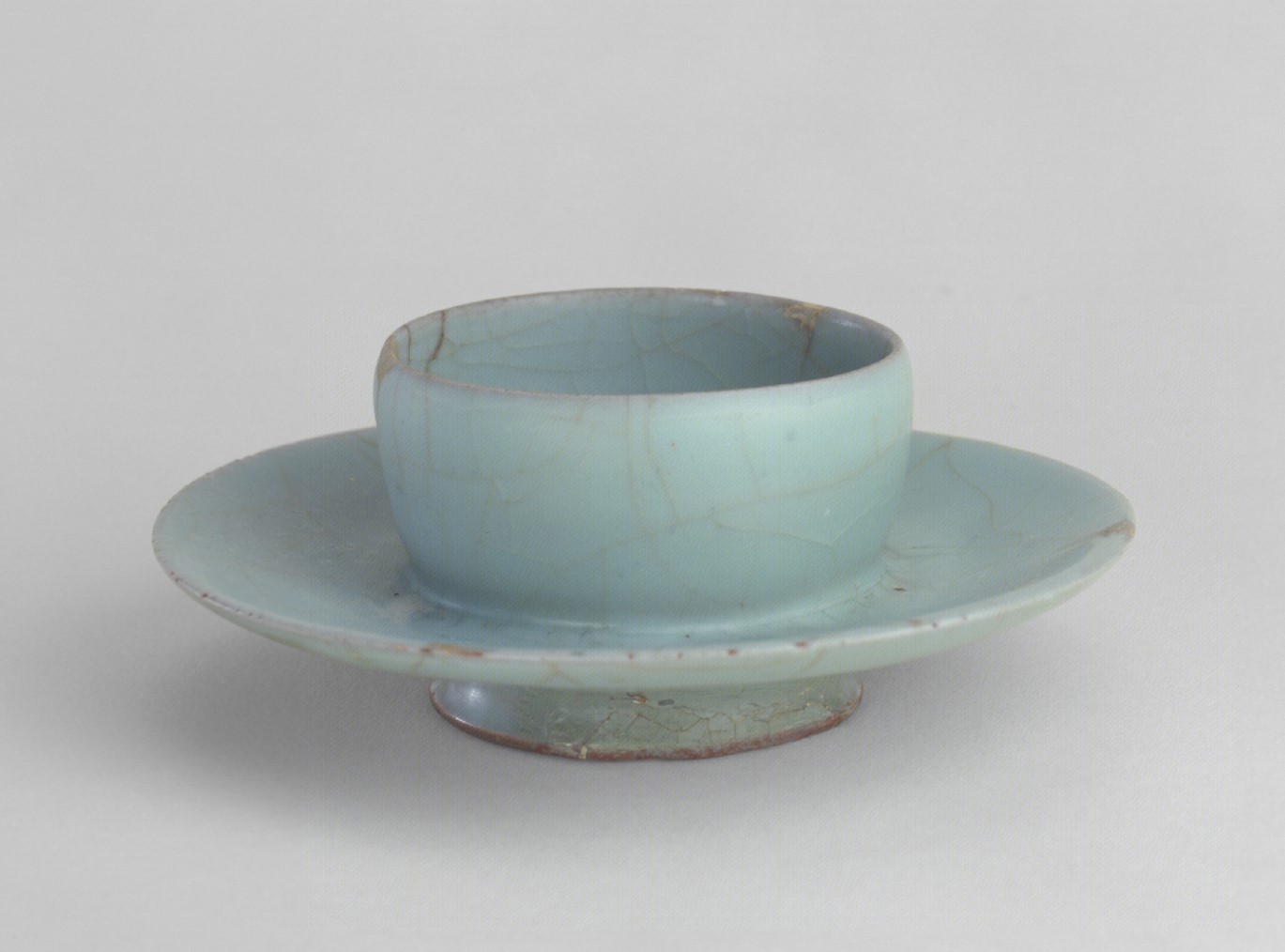 A Song Dynasty tea cup with fused suacer, diameter 8.1 cm
5. Ming Dynasty(1368~1644): Adding Lids
Loose-leaf brewing became the predominant method of tea preparation during the Ming Dynasty(as it remains today). This period witnessed the popularization of specialized teapots, most notably Yixing zisha teapots, as well as the smaller-sized teacups that we are familiar with now.
The term "tea cup" emerged, though older names like "zhǎn" and "ōu" were still used. Many tea cup designs from the Ming Dynasty became timeless classic, with numerous retros still in production today, maybe you are using one of them right now.
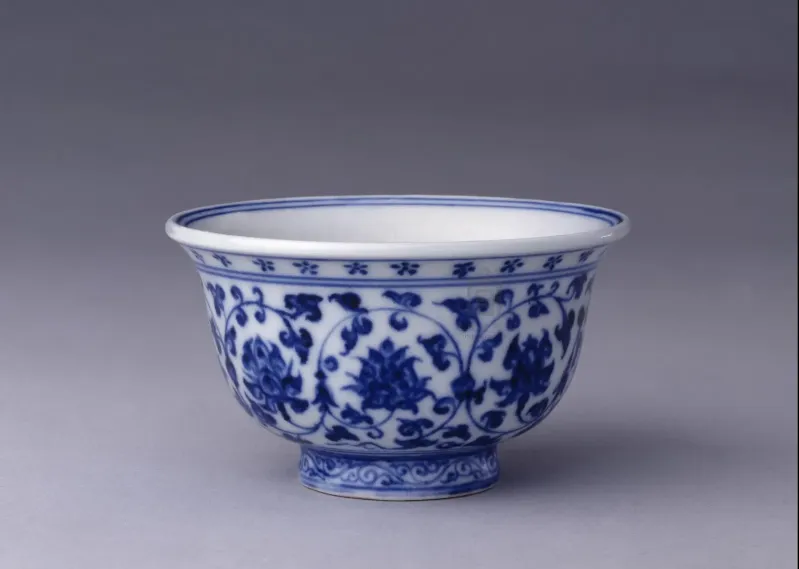 Ming Dynasty blue-and-white tea cup, diameter 9.2cm
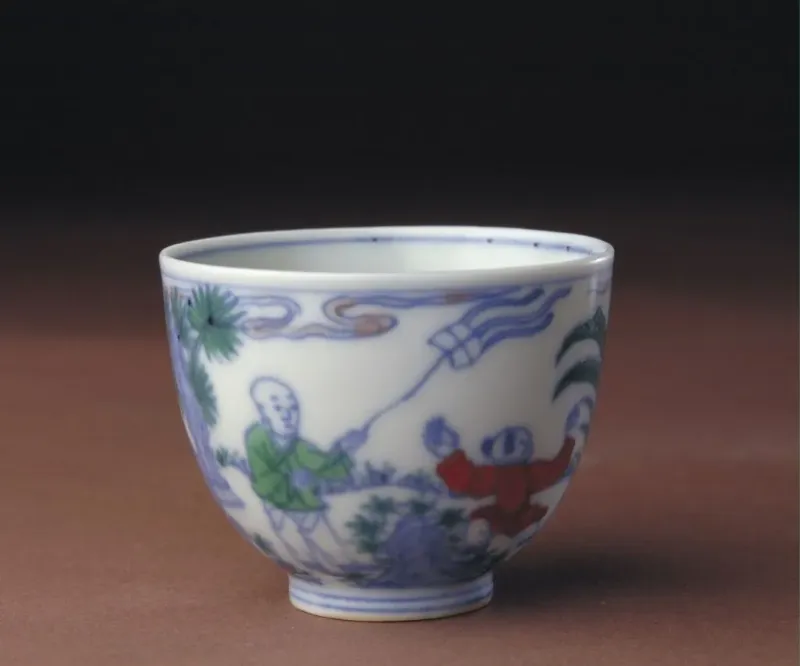 A Ming Dynasty doucai tea cup, diameter 6 cm
Medium-to-large tea bowls were still commonly used for direct brewing, as historical records confirm. After all, teapots were far costlier and less convenient than bowls.
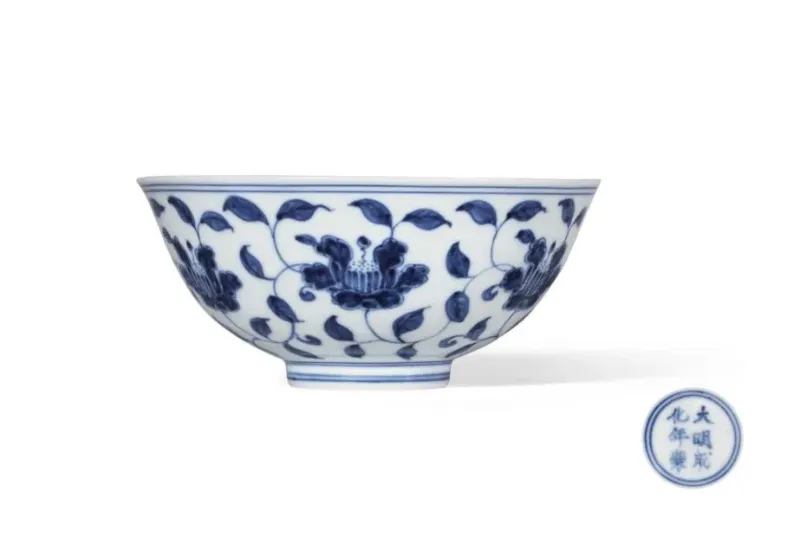
A Ming Dynasty blue-and-white tea bowl, diameter 15 cm
Unfortunately, very few Ming lidded bowls survive now. Take these below as example, I don't think they were true gaiwans or even tea wares - given their size and design, their lids functioned simply as covers rather than integrated components like the gaiwan we know today.
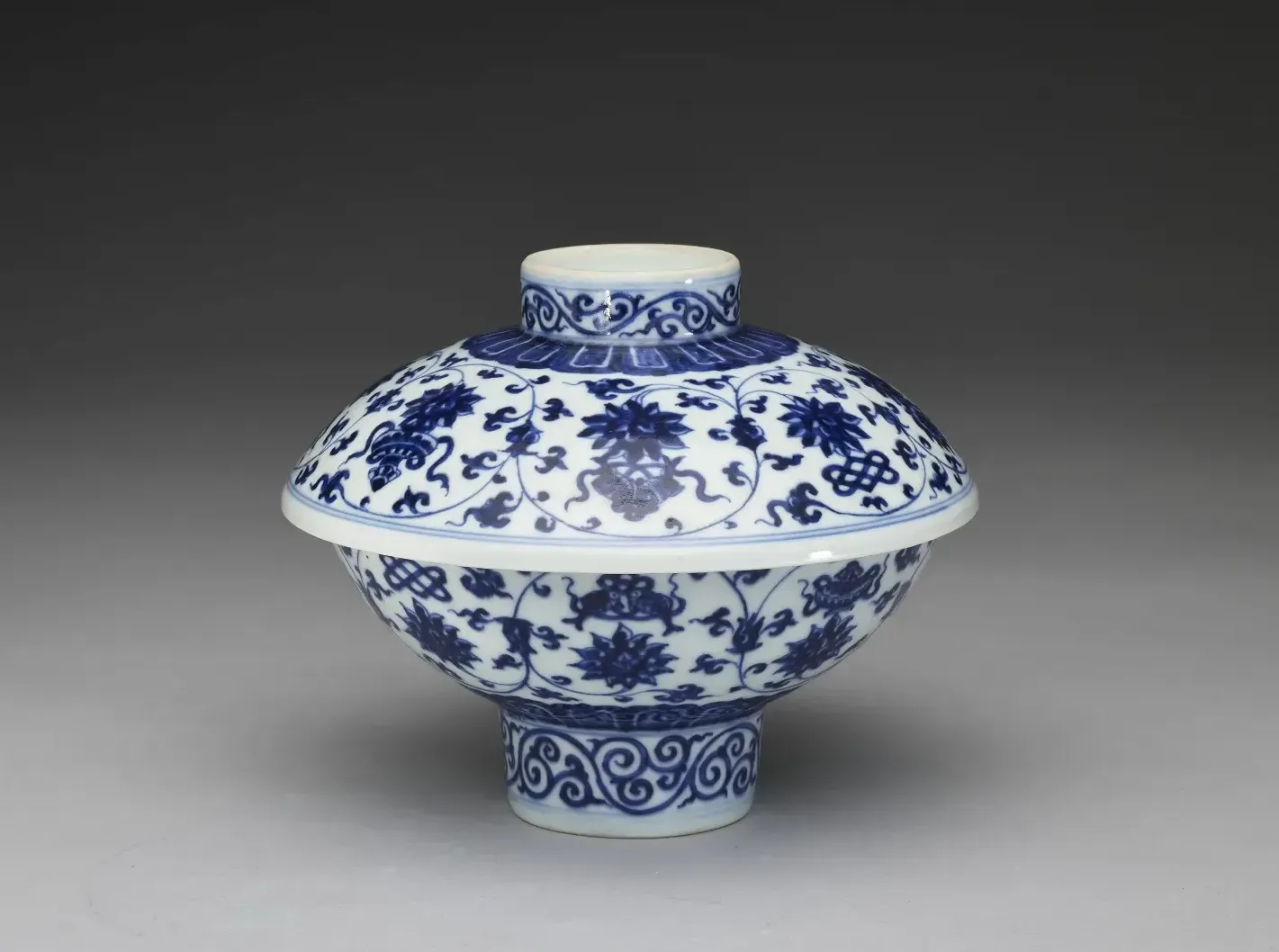 A Ming dynasty blue-and-white lidded bowl, diameter 15.2 cm
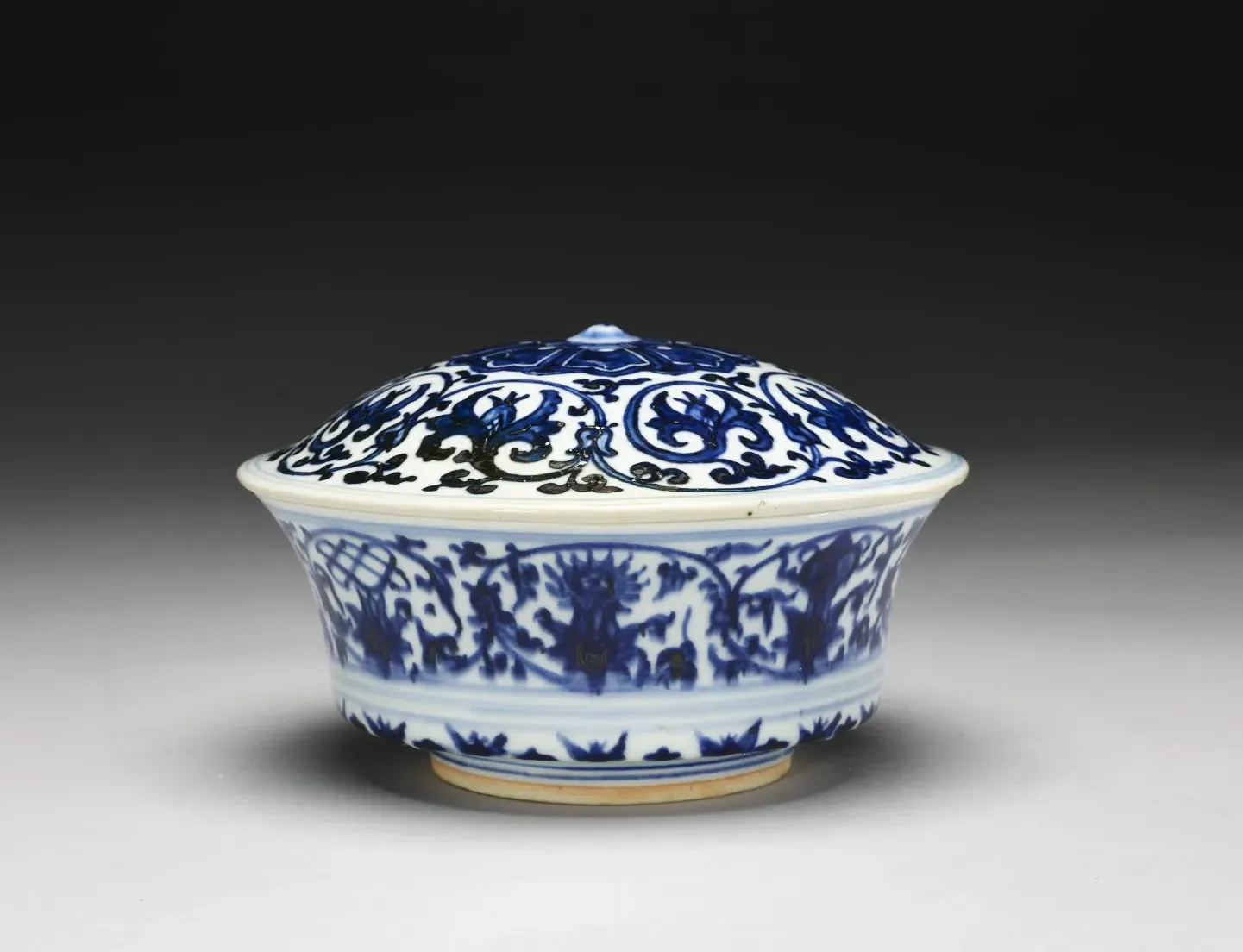 A Ming dynasty blue-and-white lidded bowl, diameter 17.2 cm